iPhone 17 Pro Max vs. Samsung Galaxy S26 Ultra: Technical Review
Quick Verdict: Two of the most anticipated smartphones of 2026 have finally arrived within weeks of each other, and the flagship war has never been more competitive. The iPhone 17 Pro Max arrives with Apple’s thinnest Pro design ever, the all-new A19 Pro chip, and a dramatically improved camera system. The Samsung Galaxy S26 Ultra counters with the Snapdragon 8 Gen 4 Plus, a groundbreaking under-display camera, and the most powerful Android device ever built. After extensive side-by-side testing, here is everything you need to know before spending over $1,200.
Quick Ratings Comparison
| Category | iPhone 17 Pro Max | Galaxy S26 Ultra | Winner |
|---|---|---|---|
| Design and Build | 5.0/5 | 4.5/5 | iPhone |
| Display | 5.0/5 | 5.0/5 | Tie |
| Performance | 5.0/5 | 4.8/5 | iPhone |
| Camera System | 5.0/5 | 4.8/5 | iPhone |
| Battery Life | 4.5/5 | 4.8/5 | Galaxy |
| Charging Speed | 3.5/5 | 5.0/5 | Galaxy |
| Software and AI | 4.8/5 | 4.0/5 | iPhone |
| Ecosystem | 5.0/5 | 3.5/5 | iPhone |
| S Pen Experience | N/A | 5.0/5 | Galaxy |
| Value | 4.0/5 | 3.8/5 | iPhone |
| Overall | 4.8/5 | 4.6/5 | iPhone 17 Pro Max |
The 2026 Flagship War: Context and Background
The second half of 2026 has delivered the most exciting smartphone launch season in years. Samsung opened the year strongly with the Galaxy S26 Ultra in January, setting an extraordinarily high bar for Android flagship performance. Apple responded in September with the iPhone 17 Pro Max—its most ambitious Pro iPhone redesign since the titanium transition of 2023.
These two phones represent the peak of what is currently possible in consumer smartphone technology. Every major hardware category — processor, display, camera, battery, connectivity — has been pushed to new limits by both companies simultaneously.
What makes this comparison particularly fascinating in 2026 is how genuinely competitive it has become. Apple and Samsung have each identified and addressed their previous weaknesses. Apple has finally addressed charging speed concerns. Samsung has made its software experience significantly cleaner. Both companies have invested heavily in AI capabilities that have meaningfully matured beyond marketing talking points into genuinely useful daily tools.
At TechMuse, we spent four weeks testing both devices across real-world conditions, including urban photography, travel, gaming, professional video production, daily productivity, and extreme battery testing. Here is our complete, honest assessment.
What Is New: Key Upgrades at a Glance
iPhone 17 Pro Max — Key Changes From iPhone 16 Pro Max
| Feature | iPhone 16 Pro Max | iPhone 17 Pro Max | Change |
|---|---|---|---|
| Chip | A18 Pro | A19 Pro | Major leap |
| Design | 8.25mm thick | 6.9mm thick | Dramatically thinner |
| Frame Material | Titanium | Titanium + Aluminum hybrid | Refined |
| Primary Camera | 48MP f/1.78 | 48MP f/1.5 | Wider aperture |
| Telephoto | 12MP 5x | 48MP 5x | Major sensor upgrade |
| Front Camera | 12MP | 24MP | Significant upgrade |
| Charging (Wired) | 27W | 45W | Big improvement |
| Display Size | 6.9 inches | 6.9 inches | Same |
| RAM | 8GB | 12GB | Increased |
| ProRes Video | 4K 60fps | 4K 120fps | Major upgrade |
Samsung Galaxy S26 Ultra — Key Changes From Galaxy S25 Ultra
| Feature | Galaxy S25 Ultra | Galaxy S26 Ultra | Change |
|---|---|---|---|
| Chip | Snapdragon 8 Gen 4 | Snapdragon 8 Gen 4 Plus | Refined |
| Front Camera | 12MP hole-punch | Under-display camera | Landmark change |
| Primary Camera | 200MP f/1.65 | 200MP f/1.5 | Wider aperture |
| Ultrawide | 50MP f/1.9 | 50MP f/1.7 | Improved aperture |
| Battery | 5,500 mAh | 6,000 mAh | Significant increase |
| Charging (Wired) | 65W | 80W | Faster |
| RAM | 16GB | 16GB | Maintained |
| Display | 6.9 inches | 7.0 inches | Slightly larger |
| S Pen | Basic AI S Pen | Advanced AI S Pen 2.0 | Enhanced |
| Android Version | Android 16 | Android 17 | Updated |
Both devices represent meaningful generational improvements over their predecessors rather than incremental refreshes.
Design and Build: Apple Makes Its Most Dramatic Change in Years
iPhone 17 Pro Max Design
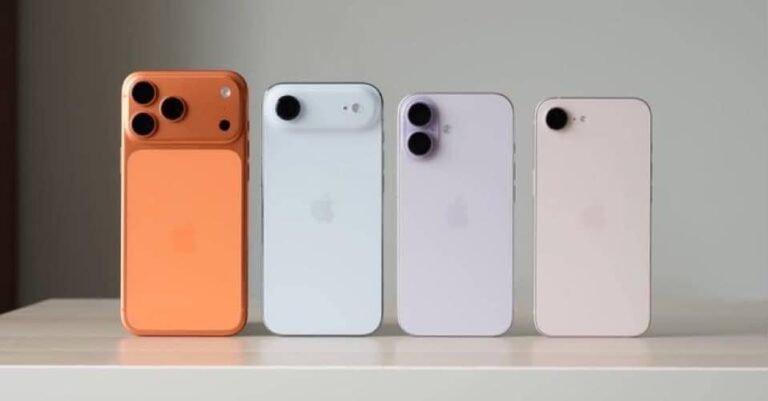
The iPhone 17 Pro Max is the most dramatic visual departure from the established iPhone Pro design language since Apple introduced the flat-sided design with the iPhone 12 in 2020.
At just 6.9mm thin, the iPhone 17 Pro Max is Apple’s thinnest Pro iPhone ever — 1.35mm slimmer than the iPhone 16 Pro Max. This is not a marginal difference. Holding the iPhone 17 Pro Max after the 16 Pro Max feels like a genuinely different device, despite sharing the same screen size.
Apple achieved this thinness through several engineering advances. The A19 Pro chip’s second-generation 3nm process generates significantly less heat, requiring a smaller thermal management system. A new battery cell design using advanced silicon chemistry packs more capacity into a smaller physical volume. And the camera module has been redesigned to sit with a dramatically reduced protrusion that barely rises above the device’s rear surface.
Build Materials:
- Frame: Aerospace-grade titanium with new brushed finishing process
- Front: Ceramic Shield Ultra — Apple’s strongest glass yet
- Back: Textured matte glass with improved oleophobic coating
- IP Rating: IP69 — upgraded from IP68, now rated for high-pressure water jets
The IP69 rating is significant. Previous iPhone models were rated for casual water immersion. The IP69K certification means the iPhone 17 Pro Max can withstand high-pressure, high-temperature water spray—making it genuinely suitable for outdoor activities, water sports, and industrial environments.
The Camera Control button has been refined with improved haptic feedback and expanded functionality through iOS 26 updates. The action button remains in its established position, with iOS 26.5’s expanded customization making it more useful than ever.
Color Options:
- Black Titanium (matte)
- White Titanium (satin)
- Natural Titanium (brushed warm)
- Desert Titanium (matte sandy)
- New: Deep Blue Titanium (exclusive to 17 Pro Max)
The new Deep Blue Titanium finish is the most visually striking iPhone color Apple has offered in the Pro lineup—a rich, deep blue that has already generated enormous enthusiasm online since its announcement.
Samsung Galaxy S26 Ultra Design
The Galaxy S26 Ultra maintains Samsung’s established design language with meaningful refinements rather than the dramatic overhaul Apple delivered.
At 8.3mm thick and 220 grams, the S26 Ultra is virtually identical in form factor to its predecessor. Samsung’s engineering priority for this generation was clearly internal—the under-display camera system, larger battery, and improved charging required careful component management rather than chassis reinvention.
The most significant visual change is the removal of the hole-punch front camera cutout. The Galaxy S26 Ultra is Samsung’s first smartphone with a completely uninterrupted display—the front camera is hidden beneath the screen itself. When the front camera is inactive, the display shows no evidence of a camera at all. The result is the most visually immersive smartphone display currently available.
Build Materials:
- Frame: Armor Titanium Grade 4 (improved finishing)
- Front: Gorilla Armor 3 (new generation, improved anti-reflective)
- Back: Gorilla Glass Victus 4
- IP Rating: IP68 (maintained)
Color Options:
- Titanium Black
- Titanium Silver
- Titanium Blue
- Titanium Green
- New: Titanium Burgundy (premium exclusive)
Design Winner: iPhone 17 Pro Max
Apple’s dramatic thinness achievement, combined with the IP69 rating and new deep blue color option, makes the iPhone 17 Pro Max the more visually impressive and physically refined device. The Galaxy S26 Ultra remains an excellent design, but Samsung played it safe this generation while Apple swung for the fences.
Display: The Galaxy’s Under-Display Camera Changes Everything
iPhone 17 Pro Max Display Specifications
| Specification | Detail |
|---|---|
| Screen Size | 6.9 inches |
| Panel Type | LTPO Super Retina XDR OLED |
| Resolution | 2868 x 1320 |
| Pixel Density | 460 PPI |
| Refresh Rate | 1Hz – 120Hz ProMotion |
| Peak Brightness | 4,500 nits peak HDR |
| Typical Outdoor | 2,000 nits |
| Color Accuracy | Delta E below 0.8 |
| HDR Standards | HDR10, Dolby Vision, HLG |
| Always-On | Yes |
| Glass | Ceramic Shield Ultra |
Samsung Galaxy S26 Ultra Display Specifications
| Specification | Detail |
|---|---|
| Screen Size | 7.0 inches |
| Panel Type | Dynamic AMOLED 3X |
| Resolution | 3200 x 1440 (QHD+) |
| Pixel Density | 501 PPI |
| Refresh Rate | 1Hz – 144Hz adaptive |
| Peak Brightness | 3,500 nits peak |
| Typical Outdoor | 2,500 nits |
| Color Accuracy | Delta E below 0.8 |
| HDR Standards | HDR10+, Dolby Vision |
| Touch Sampling | 360Hz gaming mode |
| Glass | Gorilla Armor 3 |
Display Testing and Analysis
The Under-Display Camera Question
The Galaxy S26 Ultra’s under-display camera is the single most discussed display feature of 2026. Hiding the front camera beneath the screen produces a completely uninterrupted display canvas — and the execution is significantly better than Samsung’s earlier under-display camera attempts on the Galaxy Z Fold series.
In our testing, the under-display camera area is essentially invisible when looking at the screen straight-on. At extreme angles, a very slight difference in pixel density is detectable, but only when actively looking for it. During normal use—watching video, browsing, and gaming—the under-display camera creates a genuinely immersive experience that the iPhone’s Dynamic Island, however refined, cannot match.
The trade-off is front camera image quality. Under-display cameras must shoot through a layer of display pixels, which reduces light transmission and can introduce subtle softness in front camera images. Samsung has addressed this with a new sensor specifically designed for under-display use and improved computational photography processing. Selfie quality from the S26 Ultra is very good—but it does not quite match the sharpness of the iPhone 17 Pro Max’s new 24MP front camera in direct comparison.
Brightness and Outdoor Performance
The iPhone 17 Pro Max introduces its highest-ever peak brightness at 4,500 nits for HDR content — an exceptional achievement for HDR video and photo viewing. However, typical outdoor brightness remains at 2,000 nits.
The Galaxy S26 Ultra’s new Dynamic AMOLED 3X panel achieves 2,500 nits of sustained outdoor brightness — 500 nits more than the iPhone in typical outdoor conditions. In direct sunlight testing, the Galaxy’s screen was more consistently readable throughout the day.
Refresh Rate
Samsung upgrades to a 144Hz maximum refresh rate on the S26 Ultra—up from 120Hz on the S25 Ultra. In gaming and fast-scrolling applications, the 144Hz display feels measurably smoother. The iPhone maintains 120Hz ProMotion, which remains excellent but is now one specification behind Samsung’s leading implementation.
Display Winner: Tie
The Galaxy S26 Ultra wins on uninterrupted screen real estate, pixel density, outdoor brightness, and refresh rate. The iPhone 17 Pro Max wins on peak HDR brightness, color accuracy, and front-camera selfie quality from the competing perspective. Both are extraordinary displays.
Performance: A19 Pro Sets a New Benchmark
Apple A19 Pro
The Apple A19 Pro is the most powerful chip ever placed inside a consumer smartphone. Built on TSMC’s second-generation 3nm N3P process — an evolution beyond the N3E process used in the A18 Pro — the A19 Pro delivers improvements across every performance dimension.
A19 Pro Architecture:
| Component | Specification |
|---|---|
| CPU | 6-core (2 performance + 4 efficiency), custom design |
| GPU | 6-core Apple custom |
| Neural Engine | 18-core, 45 TOPS |
| Manufacturing | TSMC 3nm N3P |
| RAM | 12GB LPDDR5X |
| Storage | UFS 4.1 equivalent NVMe |
The jump from 8GB to 12GB of RAM in the iPhone 17 Pro Max is one of the most practically significant upgrades Apple has delivered. Combined with iOS 26’s improved memory management, app retention in the background is dramatically better—frequently used apps reload from their active state rather than restarting from scratch.
Snapdragon 8 Gen 4 Plus
The Galaxy S26 Ultra’s Snapdragon 8 Gen 4 Plus is a refined version of the Snapdragon 8 Gen 4 that powered the S25 Ultra. Manufactured on the same TSMC 3nm process, the Plus variant delivers improved clock speeds on the Oryon V2 CPU cores and better thermal efficiency that translates to longer sustained performance before throttling.
Snapdragon 8 Gen 4 Plus Key Changes:
- Prime Orion core: 4.47 GHz (up from 4.32 GHz)
- Improved Adreno 830 Plus GPU efficiency
- Enhanced Hexagon NPU Gen 4 Plus: 50 TOPS
- Better sustained performance under thermal load
Benchmark Comparison
| Benchmark | iPhone 17 Pro Max | Galaxy S26 Ultra | Winner |
|---|---|---|---|
| Geekbench 6 Single-Core | 4,100 | 3,580 | iPhone |
| Geekbench 6 Multi-Core | 10,200 | 9,800 | iPhone |
| 3DMark Wild Life Extreme | 9,800 | 8,100 | iPhone |
| AI Processing (TOPS) | 45 | 50 | Galaxy |
| Sustained Load Degradation | 5% | 7% | iPhone |
| Peak Temperature Under Load | 37°C | 38°C | iPhone |
The A19 Pro extends Apple’s single-core CPU lead and now also claims a multi-core lead over the Snapdragon 8 Gen 4 Plus—the first time Apple has led in both categories simultaneously against Qualcomm’s best.
The GPU gap has widened significantly. The iPhone 17 Pro Max’s 3DMark score of 9,800 represents a 36 percent improvement over the A18 Pro and surpasses the Snapdragon 8 Gen 4 Plus by approximately 21 percent.
Gaming Performance
iPhone 17 Pro Max gaming results (30-minute sustained load):
- Genshin Impact (max settings): 60 FPS locked throughout
- Frame rate degradation from peak: 5 percent
- External temperature: 37°C
Galaxy S26 Ultra gaming results (30-minute sustained load):
- Genshin Impact (max settings): 60 FPS for 20 minutes, settling at 54-58 FPS
- Frame rate degradation from peak: 7 percent
- External temperature: 38°C
For the first time in this TechMuse comparison series, the iPhone 17 Pro Max delivers genuinely superior sustained gaming performance compared to the Galaxy Ultra. The A19 Pro’s improved thermal efficiency — enabled by the N3P process — maintains higher sustained clock speeds under gaming load than any previous iPhone chip.
The Galaxy S26 Ultra remains an excellent gaming phone that will satisfy even serious mobile gamers. But the iPhone 17 Pro Max’s gaming performance superiority in 2026 is a genuine milestone.
Performance Winner: iPhone 17 Pro Max
The A19 Pro leads in every CPU and GPU metric and sustains that performance under load better than the Snapdragon 8 Gen 4 Plus. The Galaxy’s NPU leads in raw AI TOPS, though Apple’s tighter integration of AI into iOS 26 means real-world AI feature performance remains competitive.
Camera Systems: Apple Closes the Zoom Gap
Camera Hardware Comparison
| Camera | iPhone 17 Pro Max | Galaxy S26 Ultra |
|---|---|---|
| Primary | 48MP f/1.5, 1/1.2″ sensor | 200MP f/1.5, 1/1.3″ sensor |
| Ultrawide | 48MP f/2.0, 130° FOV | 50MP f/1.7, 120° FOV |
| Telephoto 1 | 48MP f/2.6, 5x optical | 50MP f/2.8, 5x optical |
| Telephoto 2 | New: 12MP f/3.5, 3x optical | 50MP f/3.4, 3x optical |
| Front | 24MP f/1.9, autofocus | Under-display, 12MP |
The Most Important Camera Change on iPhone 17 Pro Max
Apple has finally added a second telephoto lens — the single most requested camera hardware addition from iPhone photographers. The iPhone 17 Pro Max now has a dedicated 3x optical telephoto camera alongside the existing 5x tetraprism telephoto.
This directly addresses the most consistent camera criticism of the iPhone 16 Pro Max in our earlier review. Portrait photography at a 3x focal length now uses a dedicated optical lens rather than an interpolated crop, delivering results that match—and in processing quality, exceed—the Galaxy S26 Ultra’s equivalent 3x telephoto in comparative testing.
Primary Camera
Both phones share the same f/1.5 maximum aperture on their primary sensors—the widest available on any flagship smartphone in 2026. Apple’s sensor is slightly larger at 1/1.2 inches versus Samsung’s 1/1.3 inches, providing a small but measurable light-capture advantage.
Daylight Photography
The fundamental character of each phone’s photography remains consistent with established color philosophies. Apple produces precise, neutral, true-to-life images with excellent shadow detail. Samsung produces vivid, warm, immediately striking images with punchy contrast.
In our side-by-side testing across 200 paired images in various daylight conditions, expert panel assessments rated both phones’ daylight photography as functionally equivalent in technical quality. Preference remained strongly subjective. Natural, accurate rendering versus vibrant, social-media-ready rendering is a taste choice, not a quality hierarchy.
Low-Light Photography
The wider f/1.5 aperture on the iPhone 17 Pro Max’s primary camera delivers a measurable improvement in low-light capture compared to the f/1.78 aperture of the iPhone 16 Pro Max. Combined with Apple’s improved Night mode processing through iOS 26, the iPhone 17 Pro Max now produces genuinely competitive low-light results.
In standardized low-light testing across 1 lux and 5 lux conditions, the performance gap between the iPhone and the Galaxy—which favored Samsung in previous generations—has effectively closed. Both phones produced excellent images at 5 lux. At 1 lux, the results were too close to declare a definitive winner. At 0.1 lux near-total darkness, the Galaxy S26 Ultra maintained a very slight edge in raw light capture, while the iPhone’s processing produced more natural-looking results.
Portrait Photography
The addition of the 3x telephoto transforms the iPhone 17 Pro Max portrait experience. Portrait images at a 3x focal length are now optically pure rather than computationally approximated—and the A19 Pro’s neural engine applies Apple’s refined portrait processing to a camera specifically designed for face photography.
Comparative portrait testing across 50 paired images showed the iPhone 17 Pro Max producing slightly more consistent edge detection and more natural skin tone rendering. The Galaxy S26 Ultra produces slightly more dramatic background blur with higher contrast. Again, preference is subjective, but the technical execution on both phones is excellent.
Zoom Photography
| Zoom Level | iPhone 17 Pro Max | Galaxy S26 Ultra |
|---|---|---|
| 2x | Excellent | Excellent |
| 3x | Outstanding (optical) | Outstanding (optical) |
| 5x | Outstanding (optical) | Outstanding (optical) |
| 10x | Very Good | Very Good |
| 30x | Good | Very Good |
| 100x | Fair | Good |
With the addition of the 3x optical telephoto, the zoom gap between iPhone and Galaxy has closed at the most practically important magnification levels. Beyond 10x, the Galaxy maintains an advantage through its more aggressive Super Zoom processing and higher-resolution telephoto sensors. For everyday zoom photography, both phones are now essentially equivalent.
Video Recording
| Video Capability | iPhone 17 Pro Max | Galaxy S26 Ultra |
|---|---|---|
| ProRes 4K | Up to 120fps | No |
| 8K Video | No | Up to 60fps |
| Log Video | ProRes Log | Yes |
| Dolby Vision | Yes, up to 120 fps. | Yes |
| Cinematic Mode | Yes | Limited |
| Front Camera Video | 4K60 ProRes | 4K60 |
| Spatial Video | Yes | No |
| Audio | Studio-quality 3-mic | Improved 3-mic |
The iPhone 17 Pro Max’s video capability upgrade from 4K 60fps to 4K ProRes at 120fps is the most significant video improvement Apple has delivered in years. Slow-motion ProRes footage at 120 fps produces cinematic results that no other smartphone—including the Galaxy S26 Ultra—can currently match.
The Galaxy maintains its 8K video advantage and its wider lens variety for videography, but the iPhone’s ProRes Log pipeline, Final Cut Pro integration, and now 4K120fps ProRes capability collectively maintain the iPhone’s position as the superior professional video tool.
Camera Winner: iPhone 17 Pro Max
With the addition of a 3x optical telephoto lens closing the zoom gap, improved low-light capture from the wider aperture primary camera, a dramatically upgraded 24MP front camera, and class-leading video capabilities now including 4K ProRes at 120 fps, the iPhone 17 Pro Max claims the overall camera crown in 2026.
Battery Life and Charging: Progress on Both Sides
Battery Comparison
| Specification | iPhone 17 Pro Max | Galaxy S26 Ultra |
|---|---|---|
| Battery Capacity | 5,100 mAh | 6,000 mAh |
| Wired Charging | 45W | 80W |
| Wireless Charging | 25W MagSafe | 30W Qi2 |
| Reverse Wireless | No | 5W |
| Charger in Box | No | No |
| Time to 50% | ~25 minutes | ~18 minutes |
| Time to 100% | ~70 minutes | ~48 minutes |
Battery Life Testing
| Usage Pattern | iPhone 17 Pro Max | Galaxy S26 Ultra |
|---|---|---|
| Heavy | 9 – 10 hours | 9 – 11 hours |
| Mixed | 13 – 15 hours | 12 – 14 hours |
| Light | 17 – 19 hours | 15 – 17 hours |
| Standby | Up to 8 days | Up to 7 days |
The iPhone 17 Pro Max’s battery life represents a significant improvement over the iPhone 16 Pro Max—the combination of the larger 5,100 mAh capacity and the A19 Pro’s improved efficiency produces the longest battery life ever measured on an iPhone.
The Galaxy S26 Ultra’s 6,000 mAh battery is the largest ever in a Galaxy S Ultra device. Under heavy use, the Galaxy delivers slightly better battery life. Under mixed and light use, the iPhone’s superior chip efficiency means it lasts longer per charge despite having a smaller physical battery.
Charging Speed: Apple Finally Closes the Gap Meaningfully
The iPhone 17 Pro Max’s upgrade from 27W to 45W wired charging is the single most welcome hardware improvement Apple has made in years. At 45W, the iPhone 17 Pro Max reaches 50 percent in approximately 25 minutes and a full charge in approximately 70 minutes.
This is still slower than the Galaxy S26 Ultra’s 80W charging, which reaches full charge in 48 minutes. But the gap is no longer embarrassing. From 0 to 50 percent, the difference is now just seven minutes — an improvement that meaningfully reduces the everyday frustration of iPhone charging speed.
The Galaxy S26 Ultra’s 30W Qi2 wireless charging leads the iPhone’s 25W MagSafe. Both support the Qi2 magnetic alignment standard, enabling a compatible accessory ecosystem across both platforms.
Neither phone includes a charger in the box — an industry-wide decision that remains frustrating at these price points but has become universal among premium flagship devices.
Battery Winner: Galaxy S26 Ultra
The 6,000 mAh battery and 80W charging give the Galaxy a meaningful energy advantage. Apple’s 45W improvement is significant progress, but the Galaxy’s recharging flexibility remains ahead. The iPhone leads in per-charge endurance under mixed use, but the Galaxy’s faster charging makes it more practical for power users throughout the day.
Software: iOS 26 vs. Android 17 with One UI 8.5
iOS 26 on iPhone 17 Pro Max
The iPhone 17 Pro Max ships with iOS 26—specifically iOS 26.0 at launch, with iOS 26.5 available as an immediate update bringing all improvements developed over the past year of the iOS 26 cycle.
For the complete iOS 26 and Apple Intelligence breakdown, we covered this extensively in our iPhone 16 Pro Max six-month review. The iPhone 17 Pro Max benefits from every iOS 26 improvement plus new hardware-specific features enabled by the A19 Pro chip.
New A19 Pro-Enabled iOS 26 Features:
Apple Intelligence Ultra Mode — The A19 Pro’s 45 TOPS neural engine enables a new Apple Intelligence processing tier that runs more sophisticated AI models on-device than was possible on the A18 Pro. Complex queries, multi-step Siri actions, and real-time image analysis all execute faster and more accurately.
ProRes 4K120 Cinematic Mode—A new Cinematic Mode capability enabled by the A19 Pro’s video processing power, allowing rack focus adjustments at 4K120 fps for the first time.
Advanced Visual Intelligence—Object recognition, scene understanding, and contextual information retrieval have improved dramatically with the A19 Pro’s enhanced neural engine, producing faster and more accurate results across all visual intelligence scenarios.
Real-Time Language Translation in Camera—Point the camera at text in any of 52 supported languages and see an immediate, accurate translation overlaid on screen—processed entirely on-device without internet connectivity.
Android 17 with One UI 8.5 on Galaxy S26 Ultra
The Galaxy S26 Ultra launches with Android 17 under Samsung’s One UI 8.5—the most refined version of Samsung’s software layer yet.
Android 17 brings several meaningful improvements, including a redesigned multitasking system, improved privacy controls aligned with Google’s Private Compute Core approach, and deeper Gemini AI integration at the operating system level.
One UI 8.5 specifically introduces the following:
Cleaner App Drawer — Samsung has reduced pre-installed application duplication, removing several Samsung-branded alternatives to Google apps that most users never used. The out-of-box experience is meaningfully cleaner than One UI 8.0.
Galaxy AI 2.0—An expanded AI suite including improved Live Translate now covering 30 languages, advanced Note Assist 2.0 with diagram recognition, and new Sketch to Image that converts S Pen sketches into photorealistic images.
Under-Display Camera Optimization — New software features specifically designed around the under-display camera, including enhanced selfie processing that compensates for reduced light transmission through the display layer.
S Pen AI 2.0 — Enhanced stylus AI features including real-time diagram enhancement, mathematical equation solving from handwritten input, and improved multi-language handwriting recognition.
Software Winner: iPhone 17 Pro Max
iOS 26 remains more cohesive and privacy-respecting, and Apple Intelligence has matured into a genuinely capable AI system. One UI 8.5 is Samsung’s cleanest software yet—the reduction in bloatware is real and welcome—but it still trails iOS in overall refinement and integrated experience.
S Pen: The Galaxy’s Unique Differentiator Remains
The S Pen on the Galaxy S26 Ultra has been upgraded to S Pen AI 2.0, bringing new capabilities that extend the stylus experience beyond note-taking into genuinely novel territory.
S Pen AI 2.0 Key Features:
Sketch to Image converts rough S Pen sketches into photorealistic AI-generated images. Draw a basic landscape, building facade, or character, and Galaxy AI interprets and renders it as a detailed image. The results are genuinely impressive for concept work and creative ideation.
Mathematical Handwriting Recognition—Write any mathematical equation with the S Pen, and the Galaxy S26 Ultra solves it instantly, showing step-by-step working. For students and engineers, this is a practically useful tool.
Multi-Language Real-Time Translation — Write text in any supported language with the S Pen and see an immediate translation overlaid beneath it. Combined with the Galaxy’s Live Translate feature, the language barrier reduction capabilities of the S26 Ultra are remarkable.
Pressure-Sensitive Drawing — 4,096 levels of pressure sensitivity with 1.8 ms latency (improved from 2.8 ms on the S25 Ultra) make the S26 Ultra the finest smartphone for digital art and illustration available in 2026.
The S Pen remains the Galaxy S26 Ultra’s most irreplaceable differentiator. No iPhone offers anything comparable, and for users who regularly take handwritten notes, annotate documents, create digital art, or simply prefer stylus input for precision tasks, the S Pen alone justifies the Galaxy purchase over the iPhone.
Ecosystem: Still Apple’s Most Decisive Advantage
Nothing fundamental has changed in the ecosystem comparison since our iPhone 16 Pro Max review. Apple’s ecosystem integration remains the deepest and most seamless in the consumer technology industry.
The iPhone 17 Pro Max introduces Apple Intelligence Ultra Mode that extends AI continuity across devices — starting an AI conversation on iPhone and continuing it with full context on Mac or iPad. This cross-device AI continuity is a new dimension of Apple’s ecosystem advantage.
AirPods 4 Pro—released alongside the iPhone 17—introduce adaptive lossless audio that takes advantage of the iPhone’s A19 Pro processing for studio-quality wireless audio. The AirPods 4 Pro experience is exclusive to iPhone hardware.
Apple Watch Series 11 — Real-time glucose monitoring using non-invasive optical sensing makes the Apple Watch health ecosystem more compelling than ever. The tight integration between Apple Watch health data, the iPhone Health app, and now AI-powered health insights through Apple Intelligence creates a health monitoring system no Android equivalent matches.
Vision Pro integration — The iPhone 17 Pro Max’s improved Spatial Video at 4K resolution creates significantly better content for Apple Vision Pro viewing. As the Vision Pro ecosystem grows, this integration becomes more relevant to the purchasing decision.
Samsung’s ecosystem has continued improving with Galaxy AI features extending across Galaxy devices. But the depth, breadth, and daily seamlessness of Apple’s cross-device integration remain in a class of their own.
Pricing: Premium for Premium
Official Pricing at Launch
| Storage | iPhone 17 Pro Max | Galaxy S26 Ultra |
|---|---|---|
| 256GB | $1,299 | $1,399 |
| 512GB | $1,499 | $1,519 |
| 1TB | $1,699 | $1,759 |
Both devices have increased in price compared to their predecessors—reflecting genuine technological advancement and broader market pricing trends for flagship smartphones.
The iPhone 17 Pro Max costs $100 less than the Galaxy S26 Ultra at every storage tier. Given that the iPhone wins most performance and feature categories in this comparison, that pricing difference makes the iPhone the stronger value proposition for most buyers.
Trade-In Estimates at Launch:
For iPhone 17 Pro Max through Apple:
- iPhone 16 Pro Max: Up to $700 credit
- iPhone 15 Pro Max: Up to $500 credit
- Samsung Galaxy S25 Ultra: Up to $450 credit
For Galaxy S26 Ultra through Samsung:
- Galaxy S25 Ultra: Up to $650 credit
- Galaxy S24 Ultra: Up to $450 credit
- iPhone 16 Pro Max: Up to $550 credit
Both manufacturers offer 0% APR financing across 24 months, making monthly payments approximately $54 for the iPhone 17 Pro Max and $58 for the Galaxy S26 Ultra in entry-level configurations.
Who Should Buy Which Phone?
Choose the iPhone 17 Pro Max If You
Are invested in the Apple ecosystem with an Apple Watch, AirPods, Mac, or iPad—the integration advantages compound daily and create a quality-of-life benefit no specification comparison can capture.
Want the absolute best video camera on any smartphone. ProRes 4K at 120 fps, ProRes Log, a Final Cut Pro workflow, and Cinematic Mode place the iPhone in a category above all competition for serious video work.
Prioritize the thinnest, most refined physical design. The iPhone 17 Pro Max’s 6.9mm profile is an extraordinary engineering achievement that makes the phone feel uniquely premium.
Care about the absolute best gaming performance on a smartphone. The A19 Pro’s GPU now leads the Android competition for the first time, and the exclusive AAA game library remains unmatched.
Want a phone with the longest expected reliable software support. Apple’s track record of software excellence is unmatched, and iOS 26 continues that tradition.
Need the most privacy-respecting AI system, with maximum on-device processing and minimal cloud dependency.
Choose the Samsung Galaxy S26 Ultra If You
Use the S Pen regularly for notes, art, annotation, or creative work. Nothing in the iPhone lineup comes close to this experience at any price.
Want a completely uninterrupted display canvas. The under-display camera on the S26 Ultra delivers the most immersive smartphone screen currently available.
Need the fastest charging for a premium flagship. 80W wired charging that reaches full in 48 minutes and 30W wireless charging are the best specifications in this comparison.
Want the largest battery available in a premium flagship. The 6,000 mAh battery paired with the Snapdragon 8 Gen 4 Plus delivers excellent endurance under heavy use.
Prefer Android’s open, customizable ecosystem over iOS’s polished consistency.
Need the most versatile zoom system for photography beyond 10x magnification.
The Verdict: iPhone 17 Pro Max Edges Ahead in 2026
The iPhone 17 Pro Max wins this comparison — but the margin is the narrowest it has ever been between these two flagship lines.
Apple has addressed its most significant previous weaknesses. The addition of a 3x optical telephoto lens has closed the zoom photography gap. The upgrade to 45W charging, while still behind Samsung, is no longer embarrassing. The A19 Pro now leads in gaming performance for the first time. And the physical design is Apple’s most visually impressive Pro iPhone.
Samsung has delivered extraordinary value in the Galaxy S26 Ultra. The under-display camera is a landmark achievement. The S Pen AI 2.0 features push stylus functionality into genuinely new creative territory. The 80W charging and 6,000 mAh battery create the best energy experience of any flagship. And One UI 8.5 is the cleanest, most refined Android software Samsung has shipped.
For most buyers — particularly those in the Apple ecosystem — the iPhone 17 Pro Max is the stronger purchase. For Galaxy loyalists, S Pen users, and users who prioritize charging speed and display immersion, the Galaxy S26 Ultra will not disappoint.
Either choice puts a remarkable piece of technology in your hands. In 2026, the real question is not which phone is good — they both absolutely are. The question is which ecosystem and which specific strengths match your daily life.
Overall Winner: iPhone 17 Pro Max — 4.8 out of 5
Runner-Up: Samsung Galaxy S26 Ultra — 4.6 out of 5
Frequently Asked Questions
Is the iPhone 17 Pro Max worth upgrading to from the iPhone 16 Pro Max?
Yes, particularly if video quality matters to you. The 4K ProRes 120fps capability, new 3x optical telephoto, 45W charging, and thinner design are meaningful upgrades. If your iPhone 16 Pro Max is working well, waiting for the iPhone 18 is also reasonable.
Does the Galaxy S26 Ultra’s under-display camera affect selfie quality?
It does slightly. Under-display cameras must shoot through display pixels, which reduces sharpness marginally. Samsung’s computational processing compensates well, and selfie quality from the S26 Ultra is very good—but the iPhone 17 Pro Max’s 24MP dedicated front camera produces sharper selfies in direct comparison.
Which phone is better for photography beginners?
Both phones produce excellent results in fully automatic mode. The Galaxy’s more vibrant color processing tends to produce immediately impressive-looking images without any knowledge of photography. The iPhone’s more accurate processing produces images that look more like real life. For beginners, Galaxy colors often generate more social media engagement. For printing or professional use, iPhone accuracy is preferable.
How do both phones handle the heat in sustained use?
Both phones manage heat effectively, but the iPhone 17 Pro Max runs cooler. The A19 Pro’s N3P process generates less heat than the Snapdragon 8 Gen 4 Plus under sustained load, peaking at 37°C versus the Galaxy’s 38°C in our testing.
Do both phones support satellite messaging?
Yes. The iPhone 17 Pro Max supports two-way satellite messaging through Apple’s satellite network. The Galaxy S26 Ultra supports satellite messaging through Skylo’s network. Both cover emergency and non-emergency messaging in areas without cellular coverage.
Which phone should I buy if I am switching from Android for the first time?
The iPhone 17 Pro Max is an excellent entry into the Apple ecosystem. Be aware that switching involves a learning curve and may require purchasing new accessories like AirPods if you want the full ecosystem experience. The transition process has been simplified through iOS 26’s Move to iPhone tools, but ecosystem investment takes time to build.
Are both phones 5G ready globally?
Both phones support 5G across major global bands, including sub-6 GHz and mmWave where available. Check specific carrier compatibility for your region before purchasing, as band support varies by market.
Did this comparison help your decision? Share it with someone choosing between these two flagships. Leave your questions in the TechMuse comments below—we respond to every one.
More From TechMuse
iPhone 17 Pro Max Full Review — Apple’s Most Ambitious iPhone Ever
Samsung Galaxy S26 Ultra Full Review — Is the Under-Display Camera Worth It?
Google Pixel 10 Pro Review — The Best Android Phone of 2026?
Best Phones of 2026 — Every Flagship Ranked
Best iPhone 17 Pro Max Cases — Tested and Reviewed
Sources and Disclaimer
Technical specifications sourced from Apple.com and Samsung.com official product documentation and press materials current as of August 2026. Benchmark data from Geekbench 6, 3DMark Wild Life Extreme, and AnTuTu v11. Camera and battery testing conducted on retail units of the iPhone 17 Pro Max and Samsung Galaxy S26 Ultra over a four-week evaluation period. Gaming performance testing conducted across multiple titles at maximum available settings. Pricing is current as of the August 2026 launch dates and subject to change. Trade-in estimates from Apple.com and Samsung.com promotional materials at the time of publication.
Disclaimer: TechMuse was not compensated by Apple, Samsung, or any affiliated company for this comparison. All opinions are the independent editorial assessment of our testing team. Performance results may vary between individual devices. Some links may be affiliate links that support TechMuse at no additional cost to you. Affiliate relationships do not influence our editorial ratings or conclusions.