iPhone 18 Series: Every Rumour You Need to Know Before September 2026
Apple hasn’t said a word. It never does this early. But the rumour mill — fed by reliable analysts, leaked schematics, and supply chain insiders — has been running at full volume for months. And what it is describing for the iPhone 18 series is genuinely remarkable: a 2nm chip that leaves every competitor behind, Face ID disappearing beneath the display, a camera that physically controls its own aperture, and — for the first time in Apple’s history — a folding iPhone that could redefine the entire lineup.
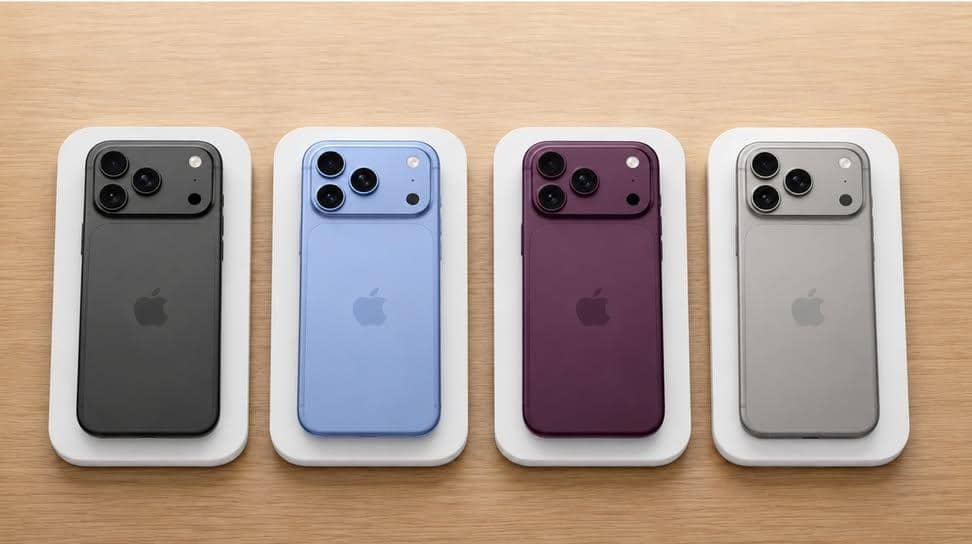
The iPhone 18 Pro, iPhone 18 Pro Max, and the long-awaited iPhone Fold are expected to headline Apple’s September 2026 event, while the standard iPhone 18 and iPhone 18e are tipped to follow in spring 2027. That split launch is itself one of the biggest changes Apple has made to its release calendar in years.
Here is everything the leaks and analysts are pointing to—clearly separated from what Apple has actually confirmed (which remains: nothing).
The Launch Calendar Is Changing — and That Matters
Based on Apple’s well-established release schedule, the iPhone 18 series is expected to debut in September 2026, likely around 8 September. But this year is different.
For the first time, Apple is reportedly splitting its flagship launch across two seasons. The iPhone 18 Pro, iPhone 18 Pro Max, and the foldable iPhone are expected in September 2026, while the standard iPhone 18 and iPhone 18e may not arrive until spring 2027.
The strategic logic is clear: concentrating the September spotlight on the Pro models and the headline-grabbing foldable maximises media attention and protects premium pricing. Buyers who want the standard model or a budget option will have to wait — or pay for a Pro.
The A20 Pro Chip: Apple’s Most Powerful Silicon Yet
The most consequential upgrade rumoured for the iPhone 18 Pro is under the hood.
All 2026 models are expected to move to Apple’s next-generation A20 silicon, built on TSMC’s 2-nanometre process, with an A20 Pro variant for the high-end phones. Early reports suggest the A20 could be up to 15% faster and 30% more power-efficient than the A19 — gains that should show up in battery life and AI workloads as much as raw benchmarks.
The shift from 3 nm (A19 Pro) to 2 nm is significant. Each step down in the process node delivers more transistors in the same physical space, translating directly to performance gains and efficiency improvements. Apple’s A-series chips have led the mobile industry at every process node since the A14—the A20 Pro is expected to extend that lead considerably.
Apple’s second-generation in-house C2 modem is also expected to feature across the lineup, promising better cellular efficiency and tighter integration with iOS than any third-party modem could deliver.
Face ID Goes Under the Display
This is the design change that has generated the most excitement — and the most credible evidence.
Rumoured upgrades include a smaller Dynamic Island with under-display Face ID components, positioning the infrared sensors beneath the display glass rather than behind a physical cutout. Industry analyst Ross Young — who has a strong track record on Apple display predictions — has been consistent on this point for two years. A leaked image of an alleged iPhone 18 Pro prototype shows a noticeably smaller Dynamic Island with what appears to be a Face ID sensor visible beneath the glass.
If the rumours hold, the Dynamic Island — Apple’s clever software workaround for the pill-shaped sensor cutout — would shrink dramatically or disappear entirely, giving the iPhone 18 Pro a near-uninterrupted display from edge to edge. What happens to Dynamic Island’s software functionality in that scenario is an open question Apple has not addressed.
Variable Aperture Camera: A First for iPhone
The camera upgrade generating the most interest among photographers is something Apple has never done before.
The iPhone 18 Pro Max is expected to get a variable aperture system, meaning users will be able to control focus and depth of field using a physical lens element — not a digital simulation. This mirrors the approach found on some high-end Android cameras, where the aperture shifts between a wide opening for low-light shooting and a narrower one for sharper depth of field in bright conditions.
Variable aperture on a phone is mechanically complex and space-intensive. The fact that multiple independent sources are reporting it as a Pro Max exclusive suggests Apple has finally solved the engineering challenge it has previously avoided. Advanced lens technology and improved sensor resolution are also expected across the broader lineup, even on models that don’t receive the variable aperture system.
The iPhone Fold: Apple’s First Foldable, Starting at $1,999
The most talked-about device arriving alongside the Pro models is not a Pro at all — it is something Apple has never shipped before.
Apple is said to be planning to launch an ultra-premium folding iPhone alongside the Pro series, with a starting price of $1,999 or more. Details on the foldable remain the thinnest of any device in the lineup. What analysts broadly agree on: it will use the A20 Pro chip, it will be the most expensive iPhone Apple has ever sold, and it will enter a market that Samsung has been developing alone for seven years.
Apple’s advantage, if it launches cleanly, will be software integration — iOS and Apple Intelligence working seamlessly across a folding form factor in a way that no Android competitor has fully achieved. Whether the Fold arrives in September 2026 alongside the Pro models or slips to early 2027 remains genuinely uncertain, with some analysts suggesting it and the iPhone Air 2 may follow their own independent release schedules.
RAM, Battery, and Display Upgrades
Beyond the headline features, several incremental but meaningful upgrades are circulating:
RAM: Rumours are split on memory. Some suggest all iPhone 18 models — including the foldable — will ship with 12GB RAM. Apple analyst Ming-Chi Kuo believes the standard iPhone 18 will land at 9GB, a 1GB increase over the iPhone 17’s 8GB. The distinction matters because certain Apple Intelligence features are expected to require at least 12GB to run locally on-device.
Battery: Multiple leaks now back up reports of the iPhone 18 Pro Max receiving a substantial improvement in battery life, though the phone will reportedly be fractionally heavier and larger as a result. Apple appears to be consciously trading a degree of thinness for meaningful longevity on the Pro Max — a trade most users will welcome.
Display: Advancements in ProMotion technology and higher peak brightness are anticipated across the lineup. The Pro models are expected to receive LTPO+ panels — a further refinement of the adaptive refresh rate technology that improves power efficiency during static content viewing.
MagSafe: One intriguing detail: rumours suggest the Ceramic Shield area around the MagSafe charging ring could be “slightly transparent” on the Pro models—a subtle design change whose practical significance remains unclear but has generated considerable speculation.
What About the Standard iPhone 18?
If you are waiting for the base iPhone 18, be prepared to wait longer than usual.
The models most shoppers will consider are reportedly holding for early 2027. The standard iPhone 18 and iPhone 18e are expected to share more components than previous generations — narrowing the gap between the two devices — and both will reportedly use the A20 chip. Display sizes are expected to stay the same: 6.3 inches for the standard iPhone 18 and 6.1 inches for the iPhone 18e, with no significant design changes anticipated.
What to Expect on Pricing
No major pricing changes are currently rumoured for the iPhone 18 Pro and Pro Max, which would place them at $1,099 and $1,199, respectively — holding the same position as the iPhone 17 Pro lineup. The foldable is the exception: at a rumoured starting price of $1,999 or more, it would be the most expensive iPhone Apple has ever sold, sitting in a premium tier entirely its own.
The Honest Bottom Line
Nothing here is confirmed. Apple will not comment on unannounced products, and the company has a long history of pivoting from even well-sourced rumours when engineering realities or strategic priorities shift. The sources behind these reports—Ming-Chi Kuo, Mark Gurman, Ross Young, and the supply chain analysts at MacRumors and Macworld—have strong track records, but track records are not guarantees.
What the cumulative weight of the evidence suggests is an iPhone 18 Pro generation that makes meaningful, visible progress: a chip that extends Apple’s performance lead, a display unbroken by any sensor cutout, a camera that brings physical optics control to iPhone for the first time, and a folding form factor that Apple has taken years to get right.
September 2026 will tell us how much of it survived contact with reality. Until then, the rumours are very good indeed.
Sources & Disclaimer
Information in this article is drawn from published rumours, leaks, and analyst reports across MacRumors, Macworld, AppleInsider, PhoneArena, TechRadar, and Tech Advisor, with analysis from Ming-Chi Kuo, Mark Gurman, and Ross Young. None of the features or specifications described here have been confirmed by Apple. Rumours are subject to change, and My Tech Muse makes no guarantee that any rumoured feature will appear in the final product. This article will be updated as new and credible information becomes available.