Exclusive iPhone Buying Guide: Which Model Should You Buy in 2026?
With Apple’s September event approaching and a first-of-its-kind foldable rumored to headline it, deciding which iPhone to buy right now takes a bit more thought than usual. Here’s how to think through it based on how you actually use your phone.
Start Here: Do You Need a Phone Right Now?
If your current iPhone is dying, cracked beyond use, or simply can’t run the apps you need, don’t wait — buy based on your budget and needs today. The rumored changes coming this fall are concentrated almost entirely in a single, extremely expensive foldable model. Everything else in the lineup is expected to see only modest, incremental updates.
If you can comfortably wait a few weeks, doing so gives you access to whatever the current-generation lineup becomes after the event, sometimes at improved pricing on the models that get replaced.
By Use Case
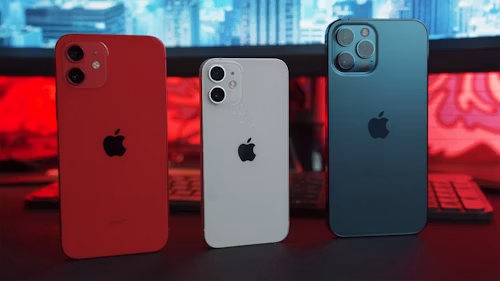
If you want the best camera and performance, and money isn’t the main constraint: Go with a Pro or Pro Max model. These get Apple’s best chips and camera systems, and depreciate more slowly on resale than base models.
If you want a great iPhone without paying flagship prices: The standard iPhone tier remains the sweet spot for most people — modern chip performance, a very good (if not class-leading) camera, and a significantly lower price than the Pro line.
If budget is your top priority: Look at Apple’s lower-cost models (like the iPhone 17e class of device). You’ll give up some camera and display refinements, but you still get current iOS support and Apple’s ecosystem features.
If you specifically want Apple’s first foldable: Budget accordingly — this is expected to be a premium device, potentially as high as $2,500, aimed at people who want the folding form factor itself, not a general “best iPhone” recommendation. Consider letting the first generation prove itself before committing, unless you’re comfortable with early-adopter risk (a first-gen hinge mechanism, and software/app support still maturing for a brand-new form factor).
Financing: Buy Outright, or Lease?
Apple recently replaced its old iPhone Upgrade Program with a new leasing option called Apple Upgrade, run through Klarna. It’s worth understanding before you check out:
- Monthly lease payments (iPhone leases currently start around $17.99/month for entry-level pricing)
- 12-month or 24-month lease terms
- At the end of the term, you can return the device, pay it off and keep it, or trade in and start a new lease
This suits people who upgrade every year or two anyway. If you like to hold onto your phone for three-plus years, buying outright — or financing through a standard interest-free installment plan if your carrier offers one — will cost you less over time, since a lease that runs past its term converts to month-to-month payments without building toward ownership unless you explicitly buy it out.
Storage: How Much Do You Actually Need?
- 128GB: fine for light users who lean on cloud storage and don’t shoot a lot of 4K video.
- 256GB: the sensible default for most people — enough headroom for photos, apps, and some offline media without constantly managing storage.
- 512GB+: worth it if you shoot a lot of video, keep a large offline music or podcast library, or simply don’t want to think about storage management again for years.
Trade-In: Don’t Skip This Step
Whatever you land on, check your old device’s trade-in value before buying. Apple, carriers, and third-party buyback services all fluctuate in what they’ll offer, and running your device through a couple of these before committing can meaningfully offset the cost of your new phone — trade-in credit can often be applied directly at checkout, including toward Apple Upgrade lease payments.
Bottom Line
Unless a foldable is specifically what you’re after, this isn’t a year where waiting nets you a dramatically different phone. Buy based on your budget and camera/performance needs today, and treat the foldable as its own separate category — an exciting one, but not the default recommendation for most shoppers.