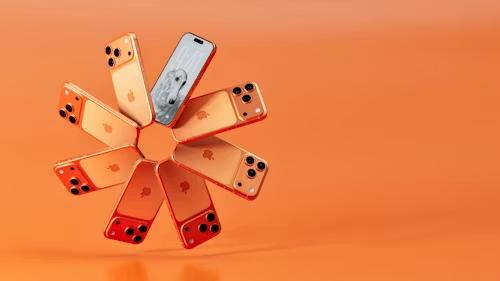
Consumers must decide between purchasing a current iPhone or waiting for Apple’s rumoured foldable device. While the foldable model promises advanced display technology and a more powerful processor, its significant price premium targets early adopters. This new category represents a specialised luxury option rather than a standard upgrade path.
Purchasing a standard iPhone remains the practical choice for most users due to proven reliability and affordability. First-generation hardware often faces durability and software challenges that mature models avoid. Unless prioritising foldable technology or maximum processing power, current devices offer a more stable investment for the average consumer.
Foldable iPhone vs. Buy Now — The Decision That Could Save You Thousands
You need a new iPhone. The question is whether you buy today or hold out for Apple’s unveiling in September — including its rumoured first foldable and how the decision actually breaks down.
What You’d Be Waiting For
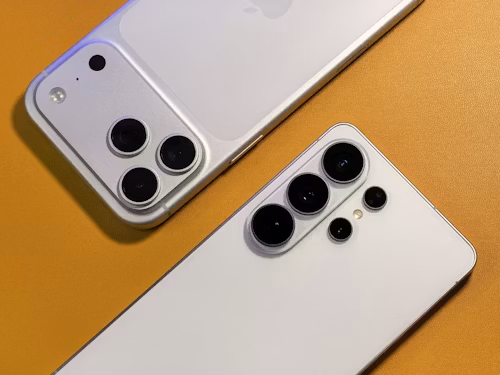
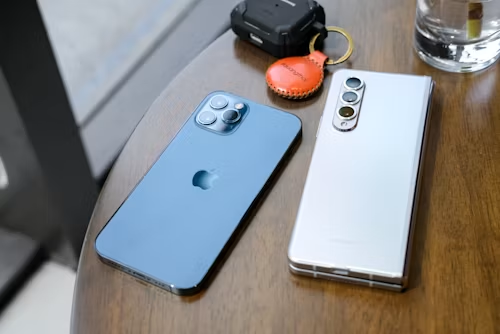
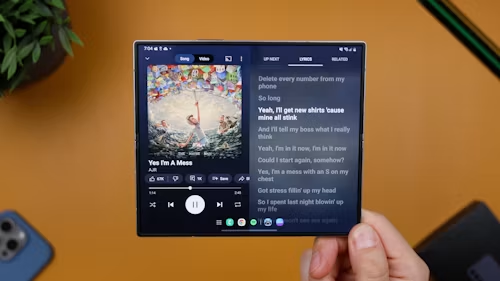
Apple’s rumored foldable — expected to be called something like the iPhone Ultra — is shaping up to be a genuinely new kind of iPhone: a book-style fold with a roughly 5.3-inch outer display that opens into a 7.6-inch inner screen, an A20 chip, and a remarkably thin 4.5mm profile when unfolded. It’s also expected to use Touch ID in the power button rather than Face ID and to cost as much as $2,500.
That price tag alone rules it out for most people. This isn’t a like-for-like replacement for a standard iPhone — it’s a premium, first-generation category device aimed at buyers who specifically want a folding phone and can afford to pay a significant premium for it.
What You’d Be Buying Now
If a folding phone was never on your radar, “waiting” doesn’t really apply to you — the standard iPhone lineup isn’t expected to see dramatic changes this cycle, since Apple’s engineering focus this year is clearly on getting the foldable right. That means a current iPhone bought today should hold up just as well against September’s non-folding models as it would have a few months ago.
The Case for Buying Now
- You need a phone today. Waiting two months for uncertain gains isn’t worth it if your current phone is on its last legs.
- You have no interest in a fold. The standard lineup isn’t getting reinvented this year, so there’s little upside to waiting.
- Budget matters. If $2,500 is nowhere near your range, the foldable was never a real option, and current-generation pricing on standard models may actually improve once the new lineup launches.
- You value proven reliability. Non-folding iPhones are a mature, well-tested form factor. A first-generation folding device inevitably carries first-generation risk — hinge durability, software polish for the new form factor, and third-party app support all tend to improve over a product’s first year or two.
The Case for Waiting
- You’re specifically excited about a foldable. If a larger unfolded screen in your pocket is genuinely appealing to you, this is the first chance to get one from Apple, and no amount of shopping today will get you that.
- You want the newest chip regardless of form factor. The foldable is expected to ship with Apple’s A20, which should make it one of the most capable phones in the lineup at launch.
- You don’t mind paying an early-adopter premium. Being first with a new category always costs more; if that trade-off doesn’t bother you, waiting makes sense.
- You’re not in a rush. If your current phone still works fine, there’s no cost to seeing real reviews and hands-on impressions before deciding.
Our Take
For the vast majority of shoppers, buying now — or waiting the few weeks until the September event to grab whatever new standard model launches — makes more financial sense than waiting on the foldable. The foldable is a speciality device at a speciality price, not a mainstream upgrade path.
If you’re genuinely torn on the foldable itself, the safer move is to let the first generation prove itself. Folding phones from other manufacturers took a few generations to iron out hinge and durability issues, and there’s no reason to assume Apple’s first attempt will be immune to that same learning curve. Buy the standard iPhone that fits your budget now, and revisit the foldable in a year or two once real-world reviews are in.
Have a comparison you want us to break down? — TechMuse Compares runs on reader requests as much as our own picks. Get in touch with us via info@mytechmuse.com