The Definitive Smartwatch Comparison of 2026: Every Major Option Ruthlessly Ranked
Choosing a smartwatch in 2026 is genuinely harder than it has ever been — not because the options are bad, but because so many of them are excellent. Apple, Samsung, Google, and Garmin have each released polished, capable hardware that comfortably outperforms what was considered premium just two years ago. Health sensors have matured. AI assistants are woven into the experience. Battery life, long the Achilles heel of the category, has improved across the board.
But the single most important question before you spend a dollar on any of them remains frustratingly simple: which phone is in your pocket?
That answer eliminates half your options immediately. From there, it comes down to what you actually want a watch to do. This guide covers every major smartwatch worth buying in 2026 — compared honestly, without the marketing spin.
The 2026 Smartwatch Market at a Glance
| Watch | Platform | Starting Price | Battery Life | Best For |
|---|---|---|---|---|
| Apple Watch Series 11 | iOS only | $399 | 18–24 hours | iPhone users, health tracking |
| Apple Watch Ultra 3 | iOS only | $799 | 60+ hours | Endurance athletes |
| Apple Watch SE 3 | iOS only | $249 | 18 hours | Budget iPhone users |
| Samsung Galaxy Watch 8 | Android (best with Samsung) | $350 | 40–48 hours | Android users, sleep tracking |
| Samsung Galaxy Watch Ultra 2 | Android (best with Samsung) | $649 | 60–72 hours | Rugged Android use |
| Google Pixel Watch 4 | Android | $350 | 48+ hours (45 mm) | Pixel users, Gemini AI |
| Garmin Forerunner 265 | iOS & Android | $449 | Up to 13 days | Serious runners |
| Garmin Venu 4 | iOS & Android | $399 | Up to 8 days | Fitness + lifestyle balance |
| Amazfit Active 3 Premium | iOS & Android | Under $200 | Up to 14 days | Best value |
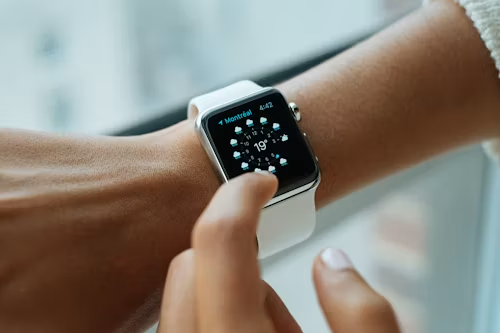
Apple Watch Series 11 — Best Overall for iPhone Users
Starting at $399 | iOS only
The Apple Watch Series 11 is the benchmark every other smartwatch is measured against — and for iPhone users, it remains the default correct answer. The Series 11 arrives with meaningful upgrades over its predecessor: blood pressure monitoring joins an already comprehensive health suite that includes ECG, blood oxygen, sleep tracking, crash detection, and an always-on display. Battery life has improved to a genuine 18–24 hours of mixed use, a meaningful step forward even if it still requires daily charging.
The display is the largest Apple has ever shipped on a standard watch — a beautiful OLED panel at 2,000 nits, sharp and readable in direct sunlight. The S10 chip keeps everything smooth and responsive, and watchOS integration with iPhone remains unmatched in tightness and reliability.
The limitation is the same one it has always been: the Apple Watch is designed exclusively for iPhone. If you switch to Android, the watch becomes a very expensive paperweight. For iOS users who are committed to the ecosystem, that is not a concern. For everyone else, read on.
Verdict: The best all-around smartwatch available — for iPhone users. A worthy upgrade from Series 9 and below; less urgent if you already own the Series 10.
Apple Watch Ultra 3 — Best for Endurance Athletes
Starting at $799 | iOS only
The Ultra 3 is for people who are genuinely hard on their gear. Built from aerospace-grade titanium with a sapphire crystal display, it is rated to withstand extreme temperature, pressure, and impact conditions that would destroy any standard watch. The 60+ hour battery life (extendable further in low-power mode) makes it the only Apple Watch you can take on a multi-day trail run or ultramarathon without a charging pack. Satellite emergency SOS is standard.
The dual-frequency GPS is the most accurate location tracking Apple has ever shipped, and the dedicated action button gives instant access to workout functions without navigating menus. A 3,000-nit display is among the brightest in the business.
At $799, it is a serious investment. The people who need it know who they are — competitive endurance athletes, mountaineers, and serious outdoor adventurers. Everyone else should save $400 and buy the Series 11.
Verdict: The best sports and adventure smartwatch in the Apple ecosystem. Overkill for most people; exactly right for its audience.
Apple Watch SE 3 — Best Budget Apple Watch
Starting at $249 | iOS only
For iPhone users who want the Apple Watch experience without the $399+ price tag, the SE 3 is the answer. It loses blood pressure monitoring, the always-on display, and ECG compared to the Series 11, but retains the essentials: heart rate monitoring, sleep tracking, crash detection, Fall Detection, and seamless iPhone integration. The same S9 chip that powered the Series 9 keeps it responsive and smooth.
If you are buying a watch for an older family member, a teenager, or simply want wrist-based notifications and fitness tracking without premium features, the SE 3 hits the sweet spot. The $150 saving over the Series 11 is real money.
Verdict: The smartwatch to buy when the price of the Series 11 is the only thing holding you back.
Samsung Galaxy Watch 8 — Best for Android Users
Starting at $350 | Android, best with Samsung
Samsung’s Galaxy Watch 8 is the top Android smartwatch for most buyers — and a genuine step forward from the Watch 7. The Exynos W1000 chip on a 3nm process delivers noticeably smoother performance, and the Super AMOLED display at 3,000 nits matches or exceeds the brightness of every Apple Watch in the lineup. Available in 40mm and 44mm sizes, both in lightweight aluminium with sapphire glass protection and IP68/MIL-STD-810 certification.
The health feature set is comprehensive: ECG, blood oxygen, skin temperature, sleep tracking with FDA-cleared sleep apnea detection, and AI-powered Energy Scores that synthesize your overnight recovery into a daily readiness metric. Battery life is the Galaxy Watch 8’s most compelling advantage over Apple — 40–48 hours in mixed use, meaning most users can skip a night of charging entirely.
Galaxy AI integration brings Samsung’s conversational AI assistant and Gemini to the wrist, with cross-app actions, real-time translation, and AI-powered workout coaching. The watch works with any Android phone, but delivers the fullest feature set when paired with a Samsung Galaxy device.
Verdict: The best Android smartwatch for mainstream users. Strong health features, excellent display, and battery life that puts Apple to shame.
Samsung Galaxy Watch Ultra 2 — Best Rugged Android Watch
Starting at $649 | Android, best with Samsung
Samsung’s answer to the Apple Watch Ultra, the Galaxy Watch Ultra 2 delivers premium titanium construction, 60–72 hours of battery life, a 3,000-nit display, and multi-sport tracking designed for serious outdoor use. It adds a physical quick button for instant workout controls and supports advanced metrics for swimming, cycling, running, and hiking with dual-frequency GPS accuracy.
For Android users who want a rugged, long-lasting companion that does not compromise on display quality or health sensors, the Ultra 2 is the most capable option in the Samsung lineup. At $649—$150 less than the Apple Watch Ultra 3—it is also more accessible than its Apple equivalent.
Verdict: The rugged Android flagship. Recommended for serious athletes and outdoors enthusiasts on Android.
Google Pixel Watch 4 — Best for Pixel Phone Users
Starting at $350 | Android
The Pixel Watch 4 is the smartwatch Google has been building toward since the original Pixel Watch. In 41 mm and 45 mm sizes, it pairs one of the sharpest displays in the category — 3,000 nits, higher resolution than both Apple and Samsung equivalents — with the deepest Gemini AI integration available on any watch.
Battery life has been the Pixel Watch’s historical weakness, and it has improved meaningfully: the 45mm model pushes 48–60 hours in real testing. The 41 mm model is tighter at 24–36 hours but still a step up from previous generations. Health tracking is comprehensive, with Fitbit’s sensor framework integrated directly into Wear OS — sleep, SpO2, heart rate, ECG, skin temperature, and stress tracking are all present and well-executed.
The standout exclusive feature for 2026 is satellite emergency SOS on LTE models — one of only two consumer smartwatches that can call for help when there is no cellular signal, the other being the Apple Watch Ultra 3. For outdoor enthusiasts on Android who don’t want to pay Ultra pricing, this is significant.
Gemini on the wrist is genuinely useful — natural language commands, cross-app actions, and context-aware suggestions are more capable here than on any Wear OS watch from a third party.
Verdict: The best smartwatch for Pixel phone owners and Google ecosystem users. Strong AI, improved battery, and a class-leading display.
Garmin Forerunner 265 — Best for Serious Runners
Starting at $449 | iOS & Android
Garmin does not compete on notification management, AI assistants, or social features. Garmin competes on GPS accuracy, training data, and battery life — and on those metrics, nothing in this guide comes close.
The Forerunner 265 delivers up to 13 days of battery life in smartwatch mode, advanced running dynamics including vertical oscillation and ground contact time, VO2 Max estimation, training load analysis, and race predictor tools that have become indispensable for competitive runners. The AMOLED colour display is a significant upgrade from Garmin’s older LCD panels, making the interface cleaner and more readable without the battery penalty you might expect.
Platform flexibility is another major advantage: the Forerunner 265 works equally well with iPhone or Android, making it the right choice for anyone who wants serious training tools without ecosystem lock-in. If you switch from iPhone to Android (or vice versa), the watch switches with you.
Verdict: The best running watch in the mainstream market. Non-runners should look elsewhere; runners who are serious about their training should look no further.
Garmin Venu 4 — Best Lifestyle-Fitness Balance
Starting at $399 | iOS & Android
Where the Forerunner is built for athletes, the Venu 4 is built for people who want serious health tracking in a design that looks at home in an office or at dinner. The AMOLED display is Garmin’s sharpest yet, with a clean watch face and intuitive navigation. Battery life reaches 8 days in smartwatch mode — far beyond any Apple or Samsung option at this price point.
Health features are extensive: Body Battery energy tracking, sleep score, stress monitoring, SpO2, hydration and women’s health tracking, and Garmin’s Morning Report that synthesises your overnight metrics into an actionable daily summary. It supports 30+ sport modes with GPS for outdoor activities.
The trade-off is the Garmin Connect app, which takes some getting used to, and a more limited smart feature set compared to Wear OS or watchOS — notifications work well, but third-party app selection is modest.
Verdict: The best smartwatch for health-focused users who want multi-day battery and don’t need a full app ecosystem on their wrist.
Amazfit Active 3 Premium — Best-Value Smartwatch
Under $200 | iOS & Android
The Amazfit Active 3 Premium is what happens when a value-orientated brand figures out what actually matters. For under $200, it delivers an AMOLED display, GPS, heart rate and SpO2 monitoring, sleep tracking, up to 14 days of battery life, and Zepp OS 4 — a reasonably capable smart platform with growing third-party support.
It is not trying to replace the Apple Watch or Galaxy Watch 8. What it does is deliver 80% of the smartwatch experience at roughly 50% of the price. For buyers who are new to smartwatches, on a tighter budget, or simply want health tracking without a premium price tag, the Active 3 Premium is the most impressive value proposition in the 2026 market.
Verdict: The best smartwatch under $200. Punches significantly above its price class.
How to Choose: The Decision Framework
You have an iPhone: Apple Watch Series 11. Full stop. Nothing on Android matches watchOS integration with iOS, and the health feature set is the most polished available. If budget is a concern, the Apple Watch SE 3. If you are an endurance athlete, Apple Watch Ultra 3.
You have an Android phone (non-Samsung): Google Pixel Watch 4 if you are in the Google ecosystem and value AI featurethe Applemsung Galaxy Watch 8 if you want the best health tracking and longest battery. Both work on any Android device; Samsung’s features are fuller on Samsung phones.
You have a Samsung Galaxy phone: Samsung Galaxy Watch 8 or Ultra 2. The Galaxy AI integration, One UI Watch experience, and FDA-cleared health features are at their deepest when paired with a Galaxy device.
You run seriously: Garmin Forerunner 265, regardless of platform. No smartwatch from Apple, Samsung, or Google offers the training depth Garmin provides.
You want multi-day battery without Garmin’s price: Amazfit Active 3 Premium or Garmin Venu 4.
You want maximum battery with premium features: Samsung Galaxy Watch Ultra 2 (Android) or Apple Watch Ultra 3 (iOS).
The Bottom Line
The smartwatch market in 2026 has never been more capable — or more segmented. Platform compatibility remains the single most important filter. Beyond that, the decision comes down to whether you prioritise health depth, AI integration, battery life, athletic training, or value.
What no longer makes sense in 2026 is buying below this list without good reason. The options above represent a market that has genuinely matured — these are tools that improve daily life in measurable ways, not novelty gadgets waiting for a use case. Pick the one built for your phone, your lifestyle, and your budget. You will not regret it.
Sources & Disclaimer
Specifications, pricing, and feature information in this article are drawn from manufacturer product pages and independent testing published by Tom’s Guide, Tech Advisor, Android Central, PhoneArena, GadgetsChamp, and The Idea Magazine. Battery life figures reflect real-world testing results from multiple sources and may vary based on usage patterns, settings, and individual conditions. Prices are correct as of July 2026 and are subject to change. My Tech Muse may earn a commission from affiliate links in this article at no additional cost to readers.