Apple Watch Series 12 Review
At a glance, the Apple Watch Series 12 looks like the Series 11 that came before it. Same 42mm and 46mm case sizes. Same 24-hour “all-day” battery rating. The same $399 starting price in the US. If you only read the spec sheet’s headline numbers, you might be forgiven for thinking Apple took the year off.
Spend a week with it, though, and a different picture emerges. Underneath the familiar aluminium and titanium shells, Apple has swapped in the S11 chip, rebuilt its Health Sensing System, and added a Readiness feature that turns scattered health signals into one daily score. Charging is faster. The aluminium model now uses Ceramic Shield 2 on the front, and a ceramic case variant joins the lineup.
The result is a watch that is easy to recommend to first-time buyers and genuinely tricky to recommend to Series 11 owners. This review walks through why.
Apple Watch Series 12 vs Series 11: Key Differences
| Feature | Series 11 | Series 12 |
|---|---|---|
| Starting price | $399 at launch | $399 |
| Chip | S10 | S11 |
| Sizes | 42 mm, 46 mm | 42 mm, 46 mm |
| Everyday battery | Up to 24 hours | Up to 24 hours |
| Low Power Mode | Up to 38 hours | Up to 38 hours reported |
| Health system | Previous sensor generation | New Health Sensing System |
| Readiness score | No | Yes |
| Aluminium front glass | Ion-X | Ceramic Shield 2 |
| Case options | Aluminium, titanium | Aluminium, titanium, ceramic |
| 15-minute charge | Up to 8 hours | Up to 12 hours |
Design and Hardware: Familiar on Purpose
Apple has not redrawn the Apple Watch. Series 12 keeps the rounded-rectangle silhouette, the digital crown, and the same two sizes. Weight and case dimensions are effectively unchanged, so bands, cases, and chargers you already own will fit.
The more interesting hardware story is materials. The aluminium model upgrades from Ion-X glass to Ceramic Shield 2, which should translate into fewer hairline scratches over a year of daily wear. Titanium remains for buyers who want the lighter, more premium finish, and a ceramic case option joins the range for the first time on a mainstream Series model.
That ceramic option matters more than it sounds. Ceramic is harder and more scratch-resistant than aluminium, and it gives Apple a distinctive middle tier between the standard aluminium watch and the titanium one.
The S11 Chip: What Actually Changes
The jump from S10 to S11 is not the kind of leap that changes what the watch fundamentally does. It is a platform refresh: more efficient processing, headroom for on-device health computation, and the baseline that future watchOS updates will target first.
In practice, everyday performance was already smooth on Series 11, and Series 12 does not feel dramatically faster in menus or app launches. The chip’s real contribution is on the sensing side, where continuous background processing has to happen without wrecking battery life.
Health Sensing: The Biggest Upgrade
A Denser Stream of Data
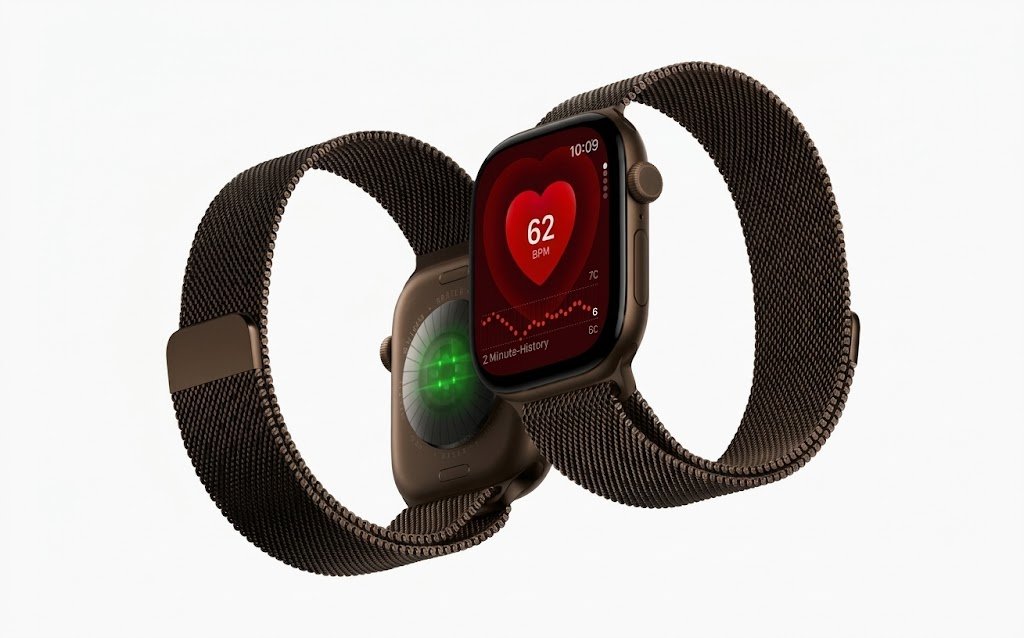
Apple says the Series 12’s new Health Sensing System can take background heart-rate readings every five seconds and measure heart-rate variability more frequently than before. That sounds like a footnote. It is not.
Sparse heart-rate sampling is the reason many wearables produce heart-rate charts that look like someone connected dots with a ruler. Denser sampling produces smoother curves, better recovery signals, and fewer gaps during intervals or strength work when your wrist moves constantly. More frequent HRV readings give recovery algorithms more to work with, too.
Readiness Arrives
The headline new software feature is Readiness. It combines recent activity, training load, sleep, and other vitals into a single daily score with accompanying guidance. The idea is to answer a question most training watches dodge: should you push today, or back off?
In use, readiness is most useful as a trend line rather than a verdict for any single morning. A string of low scores alongside poor sleep is a genuine signal. A single mediocre score after a late night is noise.
A Necessary Caveat
Readiness and the new sensing metrics are wellness tools, not medical diagnoses. They are not intended to detect or treat any condition, and you should not make clinical decisions based on them. Apple’s accuracy claims are company statements and should not be treated as independent clinical validation. If you have a heart concern, that is a conversation for a doctor, not a watch face.
Audio and Charging: Smaller but Welcome Wins
Apple has added new audio tools this generation, aimed at everyday listening convenience rather than audiophile ambitions. It is the kind of addition that quietly improves daily use without appearing anywhere near a marketing headline.
Charging is the more concrete improvement. A 15-minute top-up reportedly delivers up to 12 hours of use on Series 12, versus up to 8 hours on Series 11. That is a 50 per cent improvement in what a short charge buys you. In practice it means a quick charge while you shower before an evening out is usually enough to get you through the rest of the day and into the next morning.
Battery Life: Still 24 Hours
This is the part of the review where the enthusiasm has to be tempered. Series 12 is still rated at up to 24 hours of everyday battery, exactly like Series 11. Low Power Mode is still listed at up to 38 hours, described as reported rather than as a leap forward.
Apple has improved how quickly you can refill the battery, but not how long the battery lasts. If you were hoping the denser sensing system would come with a longer runtime, it hasn’t. For sleep tracking plus a full day of use, you are still on a two-charge-per-day rhythm on heavier days.
What Series 11 Owners Still Keep
A Series 11 does not become obsolete the moment Series 12 ships. WatchOS updates continue to bring several features to older compatible hardware, and Series 11 already handles the fundamentals well: activity tracking, sleep features, safety alerts, notifications, and Apple Pay.
The hardware-specific reasons to move up are narrower than the length of this article might suggest:
- The new health sensing system and denser heart-rate sampling
- More frequent HRV data feeding recovery insights
- Readiness scoring
- The S11 platform and its longer software runway
- Faster charging
- Ceramic Shield 2 and the new ceramic case option
What you are not getting is a new shape, a new screen size, or a longer daily runtime. Those are the things most people notice every single day, and Series 12 leaves all three alone.
Should You Upgrade?
Upgrade from Series 11 if:
- You care about more frequent health and recovery data.
- You regularly run out of battery during travel or workouts.
- Faster charging would improve your routine.
- You want ceramic or the newer front-glass construction.
- You plan to keep the watch for several years and want the newer chip.
Keep Series 11 if:
- It still lasts through your normal day.
- You mainly use notifications, workouts, sleep, and safety features.
- You can buy it substantially cheaper during clearance sales.
- The new health metrics do not address a specific need.
Rating Breakdown
| Category | Score | Notes |
|---|---|---|
| Design and build | 9/10 | Ceramic Shield 2 and a new ceramic case option are real gains. |
| Performance | 8/10 | S11 is a platform refresh, not a visible speed leap. |
| Health features | 9/10 | Denser sampling and readiness are the year’s headline additions. |
| Battery and charging | 7/10 | Faster charging, but the 24-hour rating is unchanged. |
| Value for new buyers | 9/10 | $399 with a new chip and new sensors is a strong package. |
| Value for Series 11 owners | 5/10 | Compelling only if the new sensing or charging solves a real problem |
Verdict
Buy the Apple Watch Series 12 if you are buying your first Apple Watch. At $399 it is the most complete entry point Apple has offered, and the S11 chip plus the new sensing system gives it a longer useful life ahead of it than a discounted Series 11.
Series 11 owners should upgrade only when the new health sensing, readiness tools, charging speed, or case materials solve a real problem for them. The unchanged daily battery rating means this is not a universal upgrade, and plenty of Series 11 owners will be perfectly happy waiting another generation.
If you are weighing the Series 12 against Apple’s larger and more rugged option, see our Apple Watch Series 12 vs Ultra 4 comparison. And if battery life is your top priority, our Apple Watch Ultra review covers what the bigger body actually delivers.
Sources: Apple event reporting, MacObserver comparison, and Macworld guide.