The Ultimate Foldable Phone Face-Off: Which One Actually Wins?
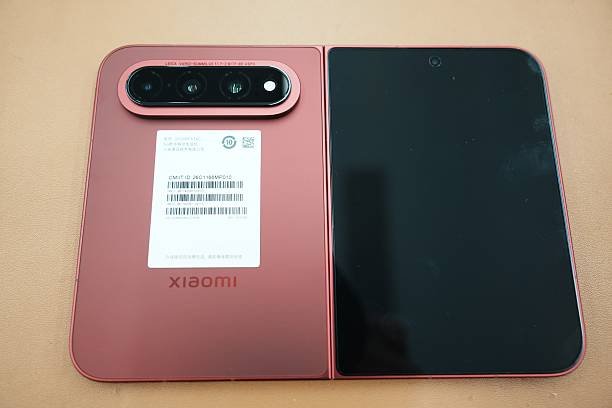
The Xiaomi 18 Fold is no longer a rumor. Xiaomi launched its wide-format book-style foldable in China on September 7, 2026, with a 7.58-inch inner screen, an in-house XRING O3 processor, a 6,000mAh battery, and a Leica-branded triple camera system. 1
That gives buyers a genuine alternative to the Samsung Galaxy Z Fold 8. The two phones take different approaches: Xiaomi pushes battery capacity, charging speed, camera hardware, and a wide passport-style design, while Samsung offers a more established international ecosystem, One UI foldable features, and broader local availability.
Xiaomi 18 Fold vs Galaxy Z Fold 8: key specifications
| Feature | Xiaomi 18 Fold | Samsung Galaxy Z Fold 8 |
|---|---|---|
| Inner display | 7.58-inch AMOLED, 120Hz | 7.6-inch foldable display, 120Hz |
| Cover display | 5.38-inch AMOLED, 120Hz | About 5.5-inch, 120Hz |
| Processor | Xiaomi XRING O3 | Snapdragon 8 Elite Gen 5 for Galaxy |
| Rear cameras | 200MP main, 50MP periscope, 50MP ultrawide | 50MP wide, 50MP ultrawide; no dedicated telephoto reported |
| Battery | 6,000mAh | 4,800mAh |
| Wired charging | 67W | 45W |
| Wireless charging | 50W | 20W reported |
| Weight | 219g | About 201 g reported |
| Software | HyperOS 4, Android 17 | One UI 9, Android 17 |
| China’s starting price | CNY 10,999 | Not directly comparable |
| International availability | China launch confirmed; global launch unconfirmed | Available in more markets |
Specifications, storage, network bands, warranty, and pricing can vary by region. The Xiaomi 18 Fold figures above are based on the China-market launch, while some Galaxy Z Fold 8 details come from current launch reporting and should be checked against Samsung’s local specification page.
Design: wide passport shape versus lighter Samsung hardware
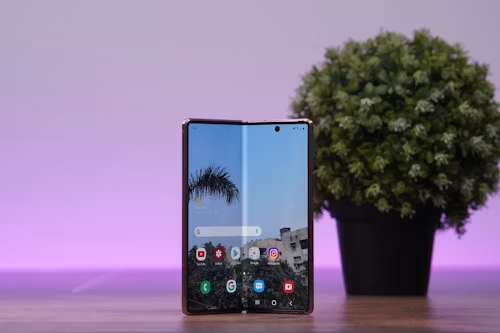
The Xiaomi 18 Fold is designed to be wider when folded than many tall, narrow book-style foldables. Its 5.38-inch cover display is slightly smaller than the Galaxy Z Fold 8’s 5.5-inch cover, while the 7.58-inch internal panel opens into a broad workspace.
Xiaomi lists the phone at 219g, with a thickness of 10.68mm folded and 5.02mm unfolded. Samsung’s Galaxy Z Fold 8 is reported to be lighter and thinner, at approximately 201 g and 9.7 mm folded. That makes Samsung the more attractive option for people who carry their foldable all day and want to minimize weight.
Xiaomi says the 18 Fold uses a new Dragon Bone Hinge, dual-layer ultra-thin glass, and Dragon Crystal Glass 3.0. Xiaomi also claims laboratory-tested improvements in drop and impact resistance. 2 Those are company test claims, not independent proof that the phone is damage-proof. Buyers should still use a case and confirm local repair terms.
Displays: Xiaomi claims the brightness advantage
The Xiaomi 18 Fold has a 5.38-inch outer AMOLED display at 1712 × 1168 resolution and a 7.58-inch inner flexible AMOLED display at 2364 × 1672 resolution. Both support refresh rates up to 120Hz, and launch reports cite peak brightness of up to 4,000 nits.
The Galaxy Z Fold 8 offers a similarly sized inner screen and a slightly larger reported cover display. Samsung’s brightness figures vary across reports, so this article does not compare peak brightness directly. 3
Peak brightness is not the same as sustained brightness in normal use. Independent testing should measure outdoor readability, crease visibility, color accuracy, touch response, and battery impact before declaring a clear display winner.
Cameras: Xiaomi has the more versatile hardware.
Xiaomi’s camera system is more ambitious on paper. It combines a 200MP main camera with a 50MP periscope telephoto and a 50MP ultrawide camera, with Leica branding. Xiaomi also includes 16MP cameras on the inner and outer displays.
Current Galaxy Z Fold 8 comparisons describe a 50MP main camera and 50MP ultrawide camera without a dedicated telephoto lens. That gives Xiaomi a hardware advantage for zoom photography and lens flexibility.
However, camera quality cannot be determined by megapixel count. The Xiaomi 18 Fold needs independent testing for autofocus, moving subjects, night photography, video stabilization, skin tones, telephoto detail, and consistency between Leica modes. Samsung may still produce more reliable results through software processing even with fewer lenses.
Battery and charging: a clear Xiaomi advantage
The Xiaomi 18 Fold has a 6,000mAh battery, 67W wired charging, and 50W wireless charging. Samsung’s Galaxy Z Fold 8 is reported to use a 4,800mAh battery with 45W wired charging and slower wireless charging.
On capacity and charging speed, Xiaomi has the stronger specification. Real-world endurance remains a separate question because the larger inner screen, brightness, processor efficiency, mobile signal, and camera use all affect battery life.
Independent battery testing is especially important for foldables. A large battery does not automatically mean longer screen-on time, and charging speed depends on the correct adapter and regional accessories.
Software and long-term support
The Xiaomi 18 Fold runs HyperOS 4 on the China launch model. The Galaxy Z Fold 8 runs Android 17 with Samsung’s One UI 9, according to current reporting.
Samsung’s advantage is its mature foldable software ecosystem. One UI has years of experience with split-screen layouts, app continuity, multitasking controls, and tablet-style workflows. Xiaomi may offer competitive features, but the China-market software experience can differ from a future global version in language support, app availability, notifications, Google services, and banking compatibility.
Samsung also promises seven years of OS updates for the Galaxy Z Fold 8, according to launch reporting, and has the clearer international support story. Xiaomi has not confirmed a global launch for the 18 Fold, so importing one may affect warranty, network compatibility, repairs, updates, and resale value.
Price and availability
China pricing for the Xiaomi 18 Fold starts at CNY 10,999 for 12GB RAM and 256GB storage. Higher configurations include 12GB plus 512GB at CNY 11,999, 16GB plus 512GB at CNY 12,999, and 16GB plus 1TB at CNY 14,999. A ceramic 1TB special edition is reported at CNY 15,999.
For comparison, Samsung’s Galaxy Z Fold 8 launched on July 22, 2026, with a US starting price of about $1,900 for 256GB, according to launch reporting. These prices should not be converted directly into a global retail price. Taxes, import fees, storage configurations, warranties, retailer margins, and regional launch plans can change the final cost.
Which foldable should you buy?
Choose the Xiaomi 18 Fold if you prioritize:
- A 6,000mAh battery
- Faster wired and wireless charging
- A 200MP Leica camera system
- A dedicated periscope telephoto camera
- A wider passport-style foldable design
- Xiaomi’s hardware approach and HyperOS
Choose the Galaxy Z Fold 8 if you prioritize:
- Lower weight
- Local availability and warranty support
- Samsung’s mature foldable software
- A more predictable international purchase
- Easier access to accessories and repairs
- Samsung’s long-term ecosystem
Final verdict
The Xiaomi 18 Fold has the more aggressive hardware package, especially for cameras, battery, charging, and display brightness. The Galaxy Z Fold 8 is the safer overall purchase for buyers who value local support, mature foldable software, and predictable international availability.
The Xiaomi 18 Fold is not automatically better simply because its specification sheet is larger. If Xiaomi brings it to your market with full Google services, local warranty coverage, compatible network bands, and competitive pricing, it could be one of the strongest alternatives to Samsung. Until then, buyers outside China should treat import availability and after-sales support as major parts of the decision.
Similar articles: Xiaomi 18 Fold review and buying guide, iPhone Duo vs. Galaxy Z Fold 8, Best Android phones in 2026