eSIM vs. Physical SIM
An eSIM is a digital SIM card embedded directly into a mobile device’s hardware, eliminating the need for physical cards. Users activate service by scanning QR codes, using carrier apps, or performing digital transfers. This technology streamlines cellular plan management and allows for multiple lines on a single device.
The technology offers advantages for international travellers and dual-line users by simplifying plan switching. While more convenient for many, physical SIM cards remain preferable for users who frequently swap devices between hardware. Compatibility varies by region and device model, though it is becoming standard for modern flagship smartphones.
eSIM Explained: The Essential Guide to How It Works and Whether You Should Switch
If you’ve bought a phone recently, you’ve probably been asked whether you want a physical SIM or an eSIM. Here’s what eSIM actually is, how it compares to a physical SIM card, and whether switching makes sense for you.
What Is an eSIM?
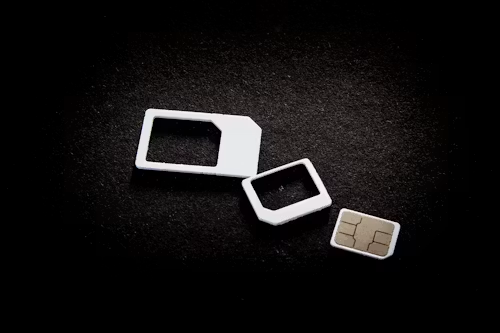
An eSIM (embedded SIM) is a digital SIM card built directly into your phone’s hardware, rather than a small physical card you insert and remove. Instead of physically swapping a card when you change carriers or add a plan, you activate service by scanning a QR code, using a carrier’s app, or transferring your plan from an existing device—all done digitally, without ever touching a physical card.
How Setup Actually Works
Activating an eSIM typically takes one of three paths:
- QR code scan: your carrier gives you a QR code (either printed, emailed, or shown in-store), and you scan it in your phone’s settings to activate the plan.
- Carrier app: many carriers now let you activate or transfer an eSIM entirely within their own app, without any code needed.
- Device-to-device transfer: if you’re moving to a new phone from an existing eSIM-equipped device, many phones allow a direct plan transfer during setup, sometimes without contacting your carrier at all.
The process generally takes a few minutes, and most carriers support it for both new activations and switching from an existing physical SIM.
eSIM vs. Physical SIM: The Real Differences
Multiple lines on one device: this is the biggest practical advantage. Most eSIM-capable phones support multiple eSIM profiles (or an eSIM alongside a physical SIM), letting you run a personal and work line, or a home and travel line, on a single device without needing a second phone or physically swapping cards.
No physical card to lose or damage: there’s no small card to misplace, and no SIM tray to fumble with or accidentally damage during a swap.
Easier international travel: this is where eSIM has become genuinely popular. Rather than hunting for a local SIM card shop when you land in another country, you can often purchase and activate a local or regional data eSIM before you even leave home, or immediately after landing, entirely through an app.
Switching phones can take a bit more effort: with a physical SIM, moving to a new phone is as simple as popping the card out and into the new device. With an eSIM, you typically need to go through your carrier’s transfer process, which can take a few extra minutes and occasionally requires contacting support if something doesn’t transfer automatically.
Not universally supported: while eSIM support has become standard on most current flagship phones, budget models and older devices don’t always include it, and not every carrier worldwide has full eSIM support yet, particularly in some regions with less mature telecom infrastructure.
Should You Switch?
Switch to eSIM if:
- You travel internationally and want to avoid buying physical local SIM cards
- You want to run a personal and work number on the same phone
- You’d rather avoid the hassle (and risk of losing) of a physical card entirely
- Your phone and carrier both fully support it
Stick with a physical SIM if:
- You frequently switch phones and prefer the simplicity of physically moving a card
- Your carrier’s eSIM support or transfer process is unreliable in your region
- You’re using an older or budget device that doesn’t support eSIM at all
A Few Practical Tips
- Keep a backup of your activation QR code if your carrier gives you one—you may need it again if you factory reset your phone or switch devices later.
- Check carrier compatibility before travelling — not every eSIM data plan works in every country, so confirm coverage for your specific destination before you buy a travel eSIM.
- Some phones support “dual eSIM” plus a physical SIM simultaneously — worth checking your specific phone model’s limits if you’re planning to juggle several lines at once.
Bottom Line
eSIM isn’t a dramatic technological leap, but it solves a handful of genuinely annoying problems — especially for frequent travellers and anyone who wants two numbers on one phone. If your phone and carrier both support it, there’s little downside to switching, and the flexibility is worth trying at least once, even if you end up sticking with a physical SIM out of habit afterward.