The iPhone 17 Series: Every Model Explained and Compared
Apple’s iPhone 17 lineup marked one of the more significant shake-ups to the iPhone family in years — not just new chips and cameras, but a genuine change to the lineup’s structure. The “Plus” model is gone, replaced by something entirely new: the iPhone Air. Here’s a complete breakdown of all four models, what sets each apart, and where each one fits.
Apple’s iPhone 17 lineup includes four distinctly different models: the standard iPhone 17, the ultra-thin iPhone Air, the performance-focused iPhone 17 Pro, and the larger iPhone 17 Pro Max. The best choice depends on whether you prioritise price, design, cameras, battery life, or performance.
Quick answer: The iPhone 17 is the best choice for most people. Choose the iPhone Air for its thin design, the iPhone 17 Pro for cameras and sustained performance, and the Pro Max for the biggest display and longest battery life.
The Lineup at a Glance
| Model | Starting Price | Display | Chip |
|---|---|---|---|
| iPhone 17 | $799 | 6.3-inch, 120 Hz | A19 |
| iPhone Air | $999 | 6.5-inch, 120 Hz | A19 Pro |
| iPhone 17 Pro | $1,099 | 6.3-inch, 120 Hz | A19 Pro |
| iPhone 17 Pro Max | $1,199 | 6.9-inch, 120 Hz | A19 Pro |
One notable shift across the entire lineup: 120Hz ProMotion displays and an Always-On Display are now standard on every model, not just the Pro tier — a meaningful upgrade for anyone buying the base iPhone 17 over previous generations.
iPhone 17: The One Most People Should Actually Buy
At $799, the standard iPhone 17 remains Apple’s best value proposition. It gets the new A19 chip, a dual 48MP rear camera system with genuinely improved low-light performance, a Camera Control button carried over from last year, and — new for this generation — a starting storage bump to 256GB, meaning you’re no longer pushed toward a pricier storage tier just to get reasonable space. It also picks up Apple’s new N1 wireless chip, improving Wi-Fi, Bluetooth, and AirDrop performance across the board.
Who it’s for: anyone who wants a current, fully capable iPhone without paying Pro-tier pricing. For most people’s day-to-day use — photos, browsing, messaging, apps — this is the sensible default.
iPhone Air: The Boldest Change in Years
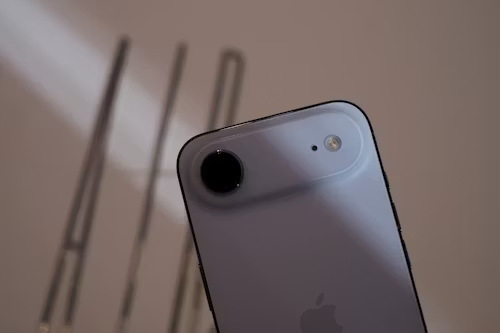
The Air replaces the old “Plus” tier, but it isn’t really a Plus successor — it’s a genuinely different kind of phone. At just 5.6mm thick, it’s the thinnest iPhone Apple has ever made, built around a 6.5-inch display that’s actually larger than the standard 17’s screen despite the much slimmer body.
To make that thinness work, Apple made real trade-offs: a single 48MP rear camera instead of the dual or triple systems on other models, and a smaller battery than you’d expect for the display size. In exchange, you get the A19 Pro chip (the same chip inside the Pro models) and Apple’s own C1X 5G modem, a component Apple designed in-house rather than sourcing from Qualcomm.
Who it’s for: buyers who prioritise how the phone feels in hand and pocket above all else and who don’t lean heavily on multi-lens photography. This is a phone built around a specific trade-off, not a phone trying to be the best all-arounder.
iPhone 17 Pro: Built for Photography and Performance
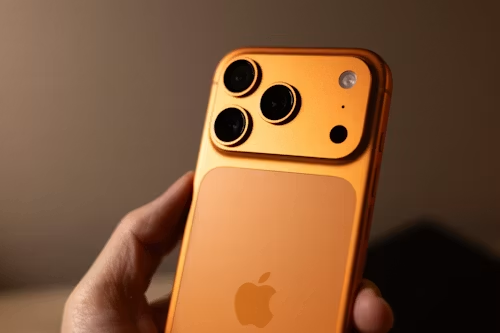
The 17 Pro steps up in every direction that matters for power users: the A19 Pro chip, 12GB of RAM (versus 8GB on the standard model), and a genuinely upgraded camera system — all three rear lenses now shoot at 48MP, including the telephoto, with up to 8x optical zoom. Apple also introduced a new vapour chamber cooling system this generation, which noticeably improves sustained performance during demanding tasks like gaming or long video recording sessions, and a new colour option is available exclusively on the Pro models.
Who it’s for: anyone who shoots a lot of photos or videos, games heavily on their phone, or simply wants the most capable iPhone without the largest possible screen.
iPhone 17 Pro Max: The Same Pro Experience, Bigger
The Pro Max carries every 17 Pro upgrade into a larger 6.9-inch display and a bigger battery, with storage starting at 256GB rather than the Pro’s 128GB base. Functionally, choosing between the Pro and Pro Max comes down almost entirely to display size and battery life preference — the camera and performance specs are otherwise matched.
Who it’s for: anyone who wants everything the 17 Pro offers, but with a larger screen and more battery headroom.
Which One Should You Actually Buy?
- Want the best value, no compromises for typical use: iPhone 17
- Want the thinnest, lightest phone Apple has ever made, and can live with one rear camera: iPhone Air
- Want the best camera system and sustained performance: iPhone 17 Pro
- Want the Pro experience with the biggest possible screen: iPhone 17 Pro Max
Bottom Line
This is the most differentiated iPhone lineup Apple has shipped in years — these aren’t four sizes of the same phone anymore; they’re four phones built around genuinely different priorities. The iPhone Air in particular is a real departure, trading camera versatility and battery capacity for a design goal Apple clearly cared about a great deal. For most buyers, the standard iPhone 17 remains the easiest recommendation, but for the first time in a while, the other three models each have a distinct, legitimate reason to exist beyond just “more expensive”.