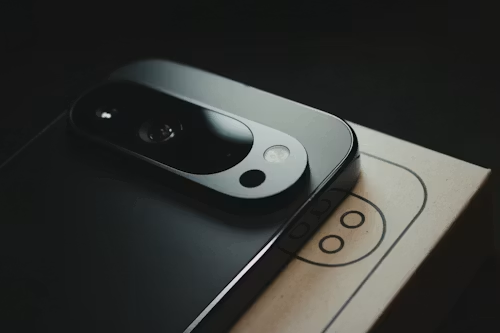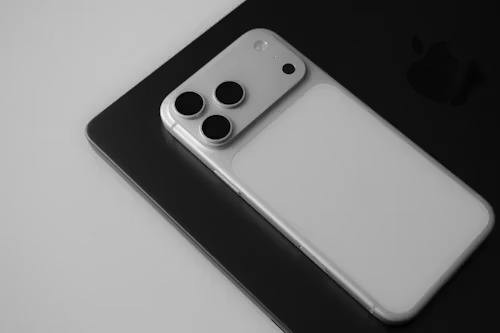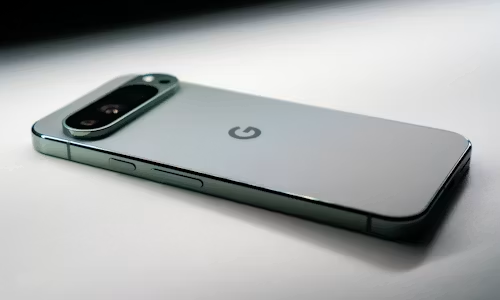
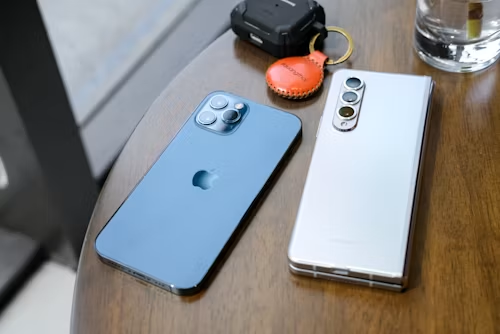
The primary distinction between Android and iPhone remains ecosystem integration and customisation. Apple provides seamless connectivity across its hardware lineup, while Android offers greater control over software layout and device defaults. Both platforms have converged in hardware quality, making camera performance and reliability largely comparable across flagship models.
Software support timelines have levelled out, as major Android manufacturers now match Apple’s long-term update commitments. Android continues to offer a broader range of price points and hardware configurations. Choosing a platform depends on existing device ownership, hardware needs, and preferences for either a streamlined or flexible interface.
Android vs. iPhone in 2026: The Real Differences That Actually Matter
The Android-versus-iPhone debate has been going on for over a decade, but a lot of the old arguments don’t hold up the way they used to. Both platforms have matured, borrowed each other’s best ideas, and closed a lot of old gaps. Here’s what genuinely still separates them in 2026—and what doesn’t matter nearly as much as people think.
Ecosystem: Still the Biggest Real Difference
This is the one factor that hasn’t changed much. If you already own a Mac, an Apple Watch, and AirPods, staying in the iPhone ecosystem buys you real convenience — Handoff, Universal Clipboard, unlocking your Mac with your Watch, and seamless AirDrop between devices. Samsung has built a comparable ecosystem across its own phones, tablets, watches, and earbuds, but it’s less universal — it works best when every device in your life is a Samsung, whereas Apple’s ecosystem extends more consistently across its whole lineup.
The honest takeaway: if you’re deep in one ecosystem already, switching costs you real day-to-day convenience. If you’re starting fresh, this shouldn’t be the deciding factor on its own.
Customisation and Control
Android still wins clearly here. You can change default apps more freely, customise your home screen layout in ways iOS doesn’t allow, and generally have more control over how your phone looks and behaves. iOS has narrowed this gap over the years with widgets and more flexible home screen options, but if deep customisation matters to you, Android remains the more flexible platform.
Cameras: Closer Than Ever
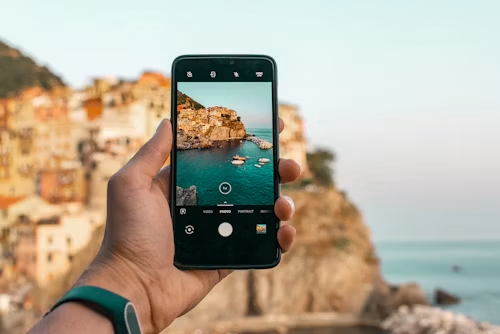
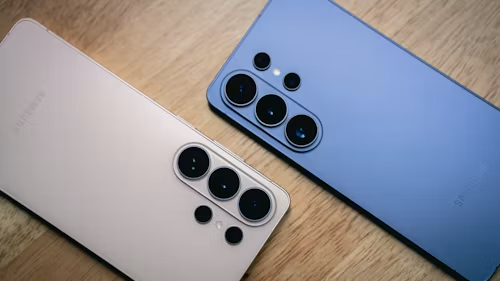
This used to be a clear Apple advantage. It isn’t anymore. Samsung’s current flagship, the Galaxy S26 Ultra, holds up well against Apple’s Pro-tier cameras, particularly in low-light shooting and video stabilisation. Google’s Pixel line remains a strong computational-photography option as well. The honest answer here is that top-tier phones from either platform will take excellent photos for the vast majority of people—the differences show up mostly in edge cases (extreme low light, specific colour science preferences, or advanced video features) rather than everyday shooting.
Software Support Timelines
This is a genuine and growing consideration. Apple has historically supported iPhones with software updates for five-plus years. Samsung has closed that gap significantly — its current flagship line now offers seven years of major OS updates, matching or exceeding what iPhone buyers get. This is a real shift from a few years ago, when Android software support was a legitimate weak point.
Security and Privacy Features
Both platforms have invested heavily here, but they approach it differently. Apple’s privacy features are baked deeply into the iOS system-wide. Samsung’s newest flagship introduced a hardware-level privacy display that limits the phone’s viewing angle so people next to you can’t read your screen — a genuinely novel feature Apple doesn’t currently offer. Neither platform has a clear overall privacy advantage anymore; it comes down to which specific features you value.
Price and Value
Android offers a much wider range of price points, from budget models to flagships, often with more storage or faster charging for the same price as a comparable iPhone. Apple’s lineup has broadened too (with lower-cost models like the iPhone 17e), but Android still generally offers more configuration options at every price tier.
What Doesn’t Matter as Much as People Think
- “Which one is more reliable?” — both platforms’ flagship phones are well-built and reliable today. Reliability differences between specific models matter more than platform-wide generalisations.
- App availability — the vast majority of major apps launch on both platforms simultaneously now. This used to be a real Android weakness; it largely isn’t anymore.
- “Android is more prone to malware” — this was true years ago when sideloading was more common and Play Store vetting was weaker. Both platforms have significantly tightened security since.
So Which Should You Buy?
- Choose iPhone if you’re already invested in Apple’s ecosystem (Mac, Watch, AirPods), you want a simpler and more locked-down software experience, or long-term resale value matters to you.
- Choose Android if you want more customisation control, you’re comparing shopping across a wider range of price points, or you specifically want features like Samsung’s Privacy Display or the S Pen.
Neither platform is objectively “better” anymore — the honest answer is that both have converged more than the ongoing online debate suggests. The right choice comes down to which ecosystem you’re already in and which specific features you’ll actually use.