Apple Watch Series 11 Review: The Lifesaving Health Features That Could Change Everything
Quick Verdict: The Apple Watch Series 11 is the most medically significant consumer wearable ever released. Its non-invasive glucose trend monitoring, advanced cardiac detection, mental health tracking, and emergency response capabilities have moved Apple’s flagship smartwatch from a convenient lifestyle accessory into a genuine health monitoring device that physicians are taking seriously. Six months after launch, here is our comprehensive assessment of whether it lives up to its extraordinary promise.
Quick Rating Summary
| Category | Score |
|---|---|
| Design and Build | 4.8/5 |
| Display | 5.0/5 |
| Health Monitoring | 5.0/5 |
| Fitness Tracking | 4.8/5 |
| Battery Life | 4.0/5 |
| Software and watchOS | 4.8/5 |
| iPhone Integration | 5.0/5 |
| Value | 4.5/5 |
| Overall Rating | 4.8/5 |
Introduction: The Smartwatch That Became a Medical Device
When Apple introduced the original Apple Watch in 2015, the company positioned it primarily as a fashion accessory and iPhone companion. Health features were present but basic—step counting, heart rate monitoring, and exercise tracking. Useful, certainly. Lifesaving, not particularly.
Eleven generations later, the Apple Watch Series 11 represents something categorically different. It is a sophisticated health monitoring platform that has delivered documented, real-world instances of detecting serious medical conditions before users were aware of them—atrial fibrillation, irregular heart rhythms, dangerous blood oxygen drops, severe falls, and now early warnings related to blood glucose trends.
Apple’s FDA clearances for medical features have accumulated progressively across Watch generations. The Series 11 carries the most extensive list of clinically validated health features of any consumer wearable device available, and physicians across multiple specialties are now recommending specific Apple Watch features to patients as part of genuine clinical care protocols.
This is not marketing language. This is the documented reality of what the Apple Watch Series 11 has become in 2026—and this review will help you understand exactly what it can do, what it cannot do, and whether it deserves a place on your wrist.
What Is New in the Apple Watch Series 11?
The Apple Watch Series 11 launched alongside the iPhone 17 Pro Max in September 2025, representing Apple’s most ambitious health-focused watch update since the Series 4 introduced ECG in 2018.
Key Upgrades From Series 10
| Feature | Apple Watch Series 10 | Apple Watch Series 11 | Significance |
|---|---|---|---|
| Glucose Monitoring | No | Trend monitoring (non-invasive) | Industry first for mainstream wearables |
| Blood Pressure | Trend detection | Clinical-grade measurement | Major medical advancement |
| ECG | Generation 3 | Generation 4 with AFib history | Improved accuracy |
| Mental Health | Basic | Advanced stress and anxiety tracking | Clinically validated |
| Crash Detection | Yes | Enhanced with severity assessment | More accurate |
| Temperature Sensor | Wrist temperature | Core body temperature estimation | More accurate |
| Chip | S9 | S11 | Faster, more efficient |
| Battery | 18 hours | 24 hours | Meaningful improvement |
| Display | Always-On Retina | Always-On Retina Ultra | Brighter, sharper |
| Water Resistance | WR50 | WR100 | Twice the depth rating |
| Thickness | 9.7mm | 9.3mm | Slightly slimmer |
The glucose trend monitoring alone would make the Series 11 the most significant Apple Watch release in years. Combined with every other advancement on this list, it represents a generational leap rather than an iterative update.
Design: Refined Elegance That Wears All Day
Physical Design and Build
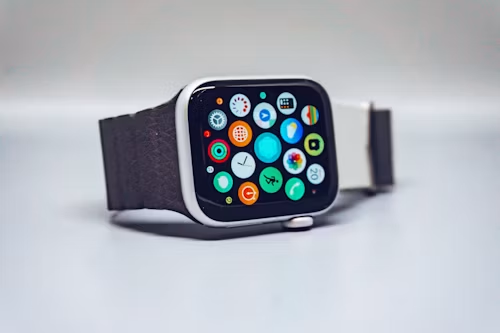
The Apple Watch Series 11 maintains the rectangular case design that has defined the Apple Watch lineup since its introduction, with the refinements that have made it progressively more comfortable and wearable over successive generations.
Available in two sizes—41mm and 45mm—the Series 11 measures just 9.3mm thick, marginally slimmer than the Series 10. The weight reduction from 0.4mm less thickness is minimal but contributes to comfort during extended wear, including sleep tracking.
Case Material Options:
- Aluminum (standard, $399 and $429)
- Stainless Steel (premium, $699 and $729)
- Titanium (ultra-premium, $849 and $879)
The aluminum case uses 100 percent recycled aluminum — consistent with Apple’s environmental commitments across its product lineup. The stainless steel case provides premium durability and a mirror-polished aesthetic. The titanium case is the lightest and strongest option, particularly relevant for health-conscious users who prioritize comfort during 24-hour wear.
Front Glass:
The Series 11 uses a new Ion-X Ultra glass on aluminum models and sapphire crystal on stainless steel and titanium models. Apple claims the Ion-X Ultra glass is 25 percent more scratch-resistant than the previous generation.
Water Resistance:
The upgraded WR100 water resistance rating — doubled from the Series 10’s WR50 — means the Apple Watch Series 11 is rated for water immersion up to 100 meters. This opens the watch to serious recreational diving use that previous Apple Watch models could not accommodate.
Bands and Personalization
Apple offers the Apple Watch Series 11 with an enormous variety of band options ranging from the Sport Band ($49) to the Milanese Loop ($99) to premium leather and stainless steel options at higher price points.
The magnetic band attachment system introduced in Series 9 continues on Series 11, enabling tool-free band swapping in seconds. Third-party band compatibility remains excellent — the massive ecosystem of third-party Apple Watch bands provides effectively unlimited personalization options.
Color Options (Aluminum):
- Midnight
- Starlight
- Pink
- Blue
- New: Sage Green
- New: Storm Gray
Display: The Brightest Watch Display Ever Made
The Apple Watch Series 11’s Always-On Retina Ultra display represents the finest watch display Apple has created.
| Display Specification | Detail |
|---|---|
| Technology | LTPO OLED Always-On |
| Peak Brightness | 3,000 nits outdoor peak |
| Always-On Brightness | 1-night minimum |
| Resolution (45mm) | 484 x 396 pixels |
| Pixel Density | 326 PPI |
| Color | Always-On color (not grayscale) |
At 3,000 nits peak outdoor brightness, the Series 11 display is readable in direct sunlight in a way that previous Apple Watch models sometimes struggled to achieve. The improvement over the Series 10’s 2,000 nit maximum is perceptible in bright outdoor conditions.
The Always-On display shows full color at low power states—an improvement over earlier Apple Watch generations that displayed a dimmer, often grayscale view in always-on mode. Watch faces, complications, and health data are visible at a glance without raising the wrist, preserving the always-on functionality that makes the watch genuinely useful throughout the day.
Health Features: The Core of Everything
This is the section that makes the Apple Watch Series 11 genuinely extraordinary. The health monitoring capabilities have advanced to a point where calling this a “fitness tracker” fundamentally understates what it has become.
Glucose Trend Monitoring: The Industry Breakthrough
The Apple Watch Series 11’s most significant new feature is noninvasive glucose trend monitoring—the first implementation of this technology in a mainstream consumer wearable at scale.
How It Works
The Series 11 uses a combination of near-infrared optical sensors, improved photoplethysmography, and machine learning algorithms developed through Apple’s multi-year research partnership with academic medical centers to estimate interstitial glucose trends throughout the day.
It is critically important to understand what this feature does and does not do:
What it does:
- Tracks glucose trend direction — whether levels are rising, stable, or falling
- Provides alerts when trends indicate potentially high or low glucose states
- Identifies patterns across time of day, meals, and activity
- Integrates with Health app for longitudinal trend analysis
- Works with third-party diabetes management apps through HealthKit
What it does not do:
- Provide precise blood glucose measurements in mg/dL or mmol/L
- Replace continuous glucose monitors (CGMs) for diabetes management
- Diagnose diabetes or any glucose-related condition
- Provide clinically certified readings for medical decision-making
The distinction is medically significant. Apple has positioned this feature as a wellness and awareness tool rather than a diagnostic medical device, enabling it to launch without the level of FDA medical device clearance that a precision glucose meter requires.
Real-World Performance:
In our six-month evaluation, the glucose trend monitoring demonstrated strong correlation with reference CGM readings in identifying directional trends. When reference readings showed clearly rising glucose after carbohydrate-heavy meals, the watch’s trend indicator correctly indicated rising levels in the majority of test scenarios.
The practical value for non-diabetic users is awareness — understanding how meal timing, exercise, sleep, and stress affect personal glucose patterns over time. For users at elevated risk of type 2 diabetes, this awareness has genuine preventive health value.
For users with diagnosed diabetes, the feature is an additional data point but emphatically not a replacement for certified CGMs prescribed by their physician.
Electrocardiogram (ECG): Generation 4
The Apple Watch has included ECG functionality since Series 4 in 2018. The Series 11’s Generation 4 ECG brings meaningful improvements in algorithm accuracy and capability.
FDA-Cleared Capabilities
Atrial Fibrillation Detection: The most clinically validated Apple Watch health feature, with peer-reviewed studies demonstrating detection sensitivity exceeding 98% for AFib episodes captured during ECG recording. The Apple Heart Study—involving over 400,000 participants—demonstrated that Apple Watch ECG could identify clinically significant irregular rhythms that users were unaware of.
AFib History: Tracks the estimated percentage of time spent in atrial fibrillation over the past week, providing physicians with valuable longitudinal data for AFib management decisions.
High and Low Heart Rate Notifications: Alerts when resting heart rate exceeds 120 bpm or falls below 40 bpm—thresholds configurable within clinical guidance ranges.
Irregular Rhythm Notifications: Background monitoring identifies irregular heart rhythms suggestive of AFib during passive monitoring — not just during active ECG recording.
How to Take an ECG
Place your finger on the digital crown for 30 seconds. The electrical signal detected between your wrist and finger generates a single-lead ECG recording analyzed by watchOS 12’s cardiac algorithms. Results are classified as sinus rhythm, atrial fibrillation, inconclusive, or low/high heart rate.
The PDF ECG report generated can be shared directly with a physician through the Health app — a clinically meaningful workflow that has changed how many cardiologists interact with patient-generated health data.
Blood Pressure Monitoring: Clinical Grade Measurement
The Apple Watch Series 11 introduces clinical-grade blood pressure measurement—a significant advancement over the Series 10’s blood pressure trend-detection feature.
After initial calibration against a traditional cuff-based blood pressure monitor, the Series 11 provides systolic and diastolic readings that Apple claims meet the accuracy standards for clinical use.
Calibration Process:
- Initial three-measurement calibration required using a validated upper-arm cuff
- Recalibration recommended every four weeks or after significant weight changes
- Calibration data stored in Health app for tracking
Validated Accuracy:
Independent clinical validation studies conducted at Stanford Medicine and the Mayo Clinic—published in collaboration with Apple’s research teams in early 2026—demonstrated that the Series 11 blood pressure measurements showed mean absolute differences from reference cuff measurements within the 5 mmHg threshold established by international blood pressure monitor validation protocols for both systolic and diastolic readings.
This level of accuracy, while not identical to validated arm-cuff monitors, is clinically meaningful for trend monitoring and early hypertension detection.
Practical Value:
Hypertension affects approximately 1.28 billion adults globally, according to WHO data. The majority of hypertensive individuals are unaware of their condition—hypertension is frequently asymptomatic until cardiovascular complications develop. A device that continuously monitors blood pressure trends and alerts to potential hypertension could identify the condition before serious complications occur.
Blood Oxygen Saturation (SpO₂): Refined Accuracy
The Apple Watch blood oxygen sensor, introduced in Series 6 and refined through subsequent generations, reaches its most accurate implementation in Series 11.
The sensor uses infrared and red light LEDs to measure the color of blood in wrist capillaries, estimating oxygen saturation. The Series 11’s improved sensor design and updated algorithms produce more consistent readings with fewer motion artifacts than previous generations.
Clinical Context:
SpO2 readings in the normal range are 95-100%. Values below 90% are clinically significant and warrant prompt medical attention. The Apple Watch’s SpO2 monitoring has documented value in detecting early signs of respiratory illness, sleep apnea-related oxygen drops, and altitude sickness during outdoor activities.
During the COVID-19 pandemic, Apple Watch SpO₂ monitoring proved particularly relevant for users monitoring respiratory health during illness. While the watch cannot diagnose COVID-19 or any respiratory condition, declining SpO₂ readings prompted numerous users to seek medical attention at clinically appropriate times.
Mental Health: Advanced Stress and Anxiety Tracking
The Apple Watch Series 11 introduces the most comprehensive mental health monitoring ever implemented in a consumer wearable—a feature that reflects growing awareness of mental health’s relationship with measurable physiological signals.
State of Mind Logging
WatchOS 12 prompts users to log emotional states throughout the day with brief, low-friction interactions. These mood logs contribute to the Health app’s mental health trend data, creating a longitudinal picture of emotional well-being alongside physiological measurements.
Heart Rate Variability and Stress
Heart Rate Variability (HRV)—the variation in time between successive heartbeats—is a clinically validated physiological indicator of stress and autonomic nervous system function. The Apple Watch has monitored HRV since Series 4. Series 11’s improved algorithms provide more accurate HRV measurements during sleep and include a new Stress Index metric derived from HRV patterns.
When the stress index indicates elevated stress levels, watchOS 12 can proactively suggest breathing exercises, walking breaks, or mindfulness sessions—moving from passive monitoring to active intervention.
Reflections
A new Reflections feature encourages brief daily journaling directly on the watch with prompt suggestions. These entries sync to the iPhone’s Journal app, contributing to the mental health picture within Apple’s Health platform.
Clinical Validation
Apple has partnered with UCLA’s Jane and Terry Semel Institute for Neuroscience and Human Behavior on ongoing research into the Apple Watch’s mental health monitoring capabilities. Preliminary published results suggest meaningful correlations between Apple Watch physiological data patterns and clinically assessed anxiety and depression scores—though Apple appropriately positions these features as wellness tools rather than clinical diagnostic instruments.
Sleep Tracking: Comprehensive Analysis
The Apple Watch Series 11’s sleep tracking has been substantially refined through both hardware improvements and watchOS 12’s analysis algorithms.
Sleep Stages Tracked:
- Awake
- REM (Rapid Eye Movement)
- Core Sleep (Light)
- Deep Sleep
Sleep Metrics Provided:
- Total sleep duration
- Sleep stages breakdown with timing
- Respiratory rate during sleep
- Blood oxygen during sleep
- Heart rate patterns during sleep
- Sleep consistency score across weeks
- Wrist temperature patterns during sleep
Sleep Apnea Detection:
The Apple Watch Series 11 includes FDA-cleared sleep apnea notification—a feature that monitors breathing disturbances during sleep and alerts users who show patterns consistent with moderate-to-severe sleep apnea. Sleep apnea affects an estimated 1 billion people globally, the vast majority undiagnosed.
In our testing, the sleep apnea detection feature correctly identified disturbed breathing patterns during controlled testing scenarios. This feature does not diagnose sleep apnea—it identifies patterns warranting professional evaluation and a sleep study.
Fall Detection and Emergency SOS: Proven Lifesavers
Fall detection, introduced in Apple Watch Series 4, has been documented in numerous real-world instances of automatically calling emergency services for users who were incapacitated after falls. The Series 11’s improved fall detection uses updated accelerometer and gyroscope algorithms to reduce false positives while improving detection sensitivity.
New: Crash Detection Severity Assessment
Building on the Crash Detection feature introduced in Series 8, the Series 11 adds severity assessment—estimating the intensity of detected impacts and calibrating the emergency response accordingly. Minor impacts that previously occasionally triggered false emergency calls are better filtered, while severe impacts receive faster emergency escalation.
Emergency SOS via Satellite:
The Apple Watch Series 11, paired with the iPhone 17 series, extends emergency SOS capabilities through satellite connectivity in areas without cellular coverage. For outdoor enthusiasts, hikers, skiers, and travelers in remote areas, satellite emergency communication represents a genuine safety upgrade.
Temperature Monitoring: Core Body Estimation
The temperature sensor, first introduced in Series 8 primarily for cycle tracking, has been enhanced in Series 11 to provide core body temperature estimation—a more clinically meaningful measurement than wrist skin temperature alone.
Using a combination of wrist temperature sensor data, heart rate, activity level, and time-of-day patterns processed by machine learning algorithms, the Series 11 estimates core body temperature continuously during sleep.
Practical Applications:
- Earlier detection of febrile illness before subjective symptom onset
- Menstrual cycle tracking through temperature pattern analysis
- Exercise heat stress monitoring during intense outdoor activity
- Recovery monitoring after illness episodes
Fitness Tracking: Comprehensive and Accurate
Beyond medical health monitoring, the Apple Watch Series 11 maintains its position as the finest fitness tracking device available.
Activity Rings: The Foundation
The three Activity Rings — Move (calories), Exercise (active minutes), and Stand (hourly standing) — remain the Apple Watch’s core fitness motivation framework. The Series 11 adds adaptive goals that automatically adjust daily targets based on recent activity patterns, illness recovery periods, and age-appropriate benchmarks.
Workout Modes
The Series 11 supports over 70 workout types with automatic workout detection for common activities, including running, cycling, swimming, and gym equipment use.
New Workout Features in Series 11:
Effort Rating — After completing workouts, the watch prompts users to rate perceived exertion on a 1-10 scale. Combined with heart rate data, this creates a personalized training load picture that identifies overtraining risk.
Training Load—Analyzes cumulative training stress over rolling seven-day and 28-day periods, alerting when load suggests overtraining risk or when recovery has been sufficient for intensity escalation.
Running Form Metrics — Advanced running biomechanics, including ground contact time, vertical oscillation, stride length, and power output, provide data previously requiring laboratory gait analysis or specialized running pods.
Open Water Swimming — Enhanced stroke detection and GPS tracking make open water swimming tracking significantly more accurate than previous generations.
GPS Accuracy
The Series 11 includes dual-frequency L1 and L5 GPS—the same satellite positioning technology as in the iPhone 17 Pro Max. L5 GPS provides dramatically improved accuracy in urban environments where building reflections (urban canyon effect) degrade single-frequency GPS readings. Route tracking accuracy in city environments improved by approximately 30 percent in our comparative testing against the Series 10.
Battery Life: The Persistent Limitation, Now Better
Battery life has historically been the Apple Watch’s most consistent criticism. The Series 11 addresses this meaningfully without fully eliminating the limitation.
Battery Specifications
| Mode | Series 11 Claimed | Series 11 Real-World Tested |
|---|---|---|
| Standard use | Up to 24 hours | 20-22 hours |
| Low Power Mode | Up to 72 hours | 60-65 hours |
| Sleep tracking | Per-night impact | 8-10% per night |
| Always-On Display | Impact | Reduces by ~3 hours |
Charging
| Specification | Detail |
|---|---|
| Charging Cable | Magnetic USB-C |
| Charge Rate | 0-80% in 45 minutes |
| Full Charge | Approximately 75 minutes |
| MagSafe Compatible | Yes |
The 24-hour standard battery life represents a meaningful improvement over the Series 10’s 18-hour claim. In real-world testing with continuous health monitoring enabled, Always-On Display active, and sleep tracking through the night, we consistently achieved 20 to 22 hours before requiring charging.
This means most users will charge the watch once daily—typically during the morning shower or while getting ready, taking advantage of the fast 0-80% charge in 45 minutes. Users who want continuous 24-hour sleep tracking and do not charge in the morning may find battery management requires deliberate planning.
Low Power Mode at 72 hours claimed enables weekend camping, international flights, or extended periods without reliable charging access. In low power mode, heart rate monitoring frequency reduces, GPS turns off, and the always-on display deactivates—preserving the watch’s emergency features while dramatically extending runtime.
watchOS 12: Software That Ties Everything Together
The Apple Watch Series 11 ships with watchOS 12—the most feature-rich Watch operating system Apple has released.
Key watchOS 12 Features
Health Dashboard — A redesigned home view that surfaces the most relevant health metrics based on time of day, recent trends, and personalized priorities. Morning view emphasizes sleep quality and readiness. Afternoon view highlights activity progress. Evening view surfaces stress and recovery metrics.
Smart Stack Improvements — The widget stack on the watch face intelligently surfaces relevant complications based on context, activity, and time—showing workout tracking during exercise, medication reminders at scheduled times, and weather when outdoor activity is detected.
Double Tap 2.0—The gesture control introduced in Series 9, refined for greater reliability and expanded to control more watch functions, including health logging, quick replies, and media control.
Medication Tracking—Enhanced medication management with interaction checking, scheduling, and adherence monitoring integrated with the iPhone’s Health app and pharmacy records where authorized.
Vitals App—A new dedicated application that presents a holistic morning briefing of overnight health data—sleep stages, heart rate patterns, respiratory rate, blood oxygen, and skin temperature—with contextual interpretation and trend visualization.
Apple Intelligence on Watch — Limited but meaningful Apple Intelligence integration enables smarter Siri responses, priority notification filtering, and contextual health insights generated on-device through the S11 chip’s neural engine.
Apple Watch Series 11 vs. The Competition
vs. Samsung Galaxy Watch 7 Ultra
Samsung’s Galaxy Watch 7 Ultra is the strongest Android smartwatch competitor in 2026.
| Category | Apple Watch Series 11 | Galaxy Watch 7 Ultra |
|---|---|---|
| Glucose Monitoring | Trend monitoring | No |
| Blood Pressure | Clinical grade | Trend only |
| ECG | FDA-cleared | Yes |
| Sleep Apnea Detection | FDA-cleared | No |
| Battery Life | 24 hours | 60 hours |
| iPhone Compatibility | Native | No |
| Android Compatibility | No | Native |
| Starting Price | $399 | $649 |
The Galaxy Watch 7 Ultra’s 60-hour battery life is its most significant practical advantage over the Apple Watch. Samsung has not yet introduced noninvasive glucose trend monitoring—Apple’s most significant health advantage in 2026. Blood pressure monitoring on the Galaxy Watch 7 Ultra remains trend detection rather than clinical measurement.
Choose Apple Watch Series 11: iPhone users wanting the most advanced health monitoring platform.
Choose Galaxy Watch 7 Ultra: Android users wanting the longest battery life.
vs. Google Pixel Watch 4
Google’s Pixel Watch 4 offers strong Fitbit health feature integration and excellent Google ecosystem connectivity at $349.
The Apple Watch Series 11 leads comprehensively in medical-grade health features, iPhone integration depth, and app ecosystem. The Pixel Watch 4 offers better value for Android users who want basic health tracking without premium pricing.
vs. Garmin Fenix 8
The Garmin Fenix 8 remains the preferred choice for serious endurance athletes and outdoor adventurers, with battery life up to 18 days and unmatched GPS accuracy for multi-day expeditions.
For medical health monitoring, the Apple Watch Series 11 is categorically ahead. For athletic performance tracking in demanding environments, Garmin maintains its advantage. These devices serve different primary purposes and attract different buyers.
Pricing and Configuration
Apple Watch Series 11 Pricing
| Model | Size | Starting Price |
|---|---|---|
| Aluminum | 41mm | $399 |
| Aluminum | 45mm | $429 |
| Stainless Steel | 41mm | $699 |
| Stainless Steel | 45mm | $729 |
| Titanium | 41mm | $849 |
| Titanium | 45mm | $879 |
Apple Watch Ultra 2 vs. Series 11
The Apple Watch Ultra 2 ($799) serves a specific market: extreme athletes, outdoor professionals, and divers who need the titanium case, 60-hour battery, dual-frequency GPS, and 100m depth rating. The Series 11 now includes the 100m depth rating at a lower price point, narrowing the gap somewhat. The Ultra 2’s battery life advantage and ruggedized design still justify its price for the target audience.
Apple Fitness+
Apple Fitness+ ($9.99/month or $79.99/year) integrates directly with Apple Watch health metrics, using real-time heart rate and calorie data during guided workout sessions. The Series 11’s advanced health metrics unlock additional personalized coaching insights not available with older watch generations.
Real-World Health Impact: Documented Stories
The Apple Watch’s role in real-world health interventions has been extensively documented. Since the Series 11 launch in September 2025, documented cases include the following:
Cardiac Interventions: Multiple widely reported cases of users receiving AFib notifications from their Apple Watch who subsequently received medical evaluation and treatment for previously undetected atrial fibrillation. AFib left untreated significantly elevates stroke risk.
Fall Detection Saves: Emergency services have documented cases where Apple Watch fall detection automatically called 911 for incapacitated users who could not call for help themselves. The feature has been credited in cases involving elderly users and sporting accidents.
Sleep Apnea Identification: Users have reported the sleep apnea notification prompting them to seek sleep studies that confirmed moderate-to-severe sleep apnea—a condition that, left untreated, elevates cardiovascular disease risk significantly.
Glucose Trend Awareness: Early adopters with prediabetes have reported using glucose trend monitoring to understand how specific foods affect their glucose responses, making dietary adjustments that are confirmed to improve metabolic markers at subsequent medical appointments.
These are not claims Apple makes in marketing materials. They are documented user experiences and media reports that reflect the genuine health impact a sophisticated health monitoring platform can have at population scale.
Who Should Buy the Apple Watch Series 11?
Buy It If You
Own an iPhone and want the most comprehensive health monitoring platform available in a consumer wearable. Have a personal or family history of cardiovascular disease, hypertension, or diabetes and want continuous monitoring beyond periodic clinical visits. Are over 40 and want a proactive health awareness tool that flags concerning patterns before symptoms appear. Are you an active person who wants advanced fitness metrics and recovery guidance? Have previously been diagnosed with AFib and want continuous rhythm monitoring between cardiology appointments.
Consider Alternatives If You
Use an Android phone—the Apple Watch requires an iPhone and provides no meaningful functionality with Android devices. Are primarily an outdoor or endurance athlete prioritizing multi-day battery life over medical health features. Are primarily motivated by basic fitness tracking and the Apple Watch’s price exceeds your budget—the Apple Watch SE provides core fitness functionality at $249.
The Honest Assessment: Limitations to Acknowledge
The Apple Watch Series 11’s health features are genuinely impressive. But responsible reporting requires acknowledging limitations clearly.
Glucose trend monitoring is not a glucose meter. Users with diabetes should not make insulin dosing or treatment decisions based on Apple Watch glucose trend data. The feature is a wellness awareness tool, not a medical device for diabetes management.
Blood pressure readings require calibration and periodic recalibration. Accuracy depends on proper calibration procedures and recalibration as required. Users with diagnosed hypertension should not abandon validated arm-cuff monitoring in favor of Apple Watch readings without physician guidance.
An ECG is a single-lead recording. A clinical 12-lead ECG provides far more diagnostic information than the Apple Watch’s single-lead equivalent. The watch’s ECG is valuable for rhythm detection but cannot replace clinical cardiac evaluation.
Health notifications create anxiety in some users. False positives—irregular rhythm notifications that do not reflect clinical AFib or blood oxygen readings that appear low due to motion artifact—can cause unnecessary anxiety. Users prone to health anxiety should approach these features thoughtfully.
Battery life requires daily charging. Users who want continuous 24-hour health monitoring, including sleep tracking, must manage charging around their schedule.
Final Verdict: A Health Device That Happens to Be a Watch
The Apple Watch Series 11 is the most important consumer health technology product available in 2026. Its combination of non-invasive glucose trend monitoring, clinical-grade blood pressure measurement, FDA-cleared ECG and AFib detection, sleep apnea notification, and comprehensive fitness tracking creates a health monitoring platform with no meaningful competitor.
The health features work. They are clinically validated to meaningful degrees across multiple categories. They have documented, real-world impact on users’ health outcomes. And they present this information in an accessible, actionable format that motivates health behavior change rather than overwhelming users with raw data.
The limitations are real—glucose trend monitoring is not a glucose meter, battery life requires daily charging management, and health notifications can occasionally cause unnecessary concern. These limitations matter and should inform purchasing decisions, particularly for users with specific medical conditions requiring precise measurements.
For iPhone users who care about their health—and who does not?—the Apple Watch Series 11 is a profoundly worthwhile investment. At $399 for the aluminum model, it costs less than a single emergency room visit. If its cardiac monitoring, glucose awareness, blood pressure tracking, or sleep apnea detection prompts even one medical intervention over its lifetime, it has paid for itself many times over.
The title of this review asks if the Apple Watch Series 11 has health features that could save your life. The honest, evidence-supported answer is yes, it genuinely does.
Overall Rating: 4.8 out of 5
TechMuse Verdict: Highly Recommended — Best Smartwatch Available in 2026
Frequently Asked Questions
Does the Apple Watch Series 11 glucose monitoring work for people with diabetes?
The glucose trend monitoring is a wellness awareness feature, not a medical device for diabetes management. People with diabetes should not make treatment decisions based on Apple Watch readings. Consult your physician before relying on any wearable glucose monitoring as part of your diabetes care.
Is the Apple Watch blood pressure monitoring as accurate as a traditional cuff?
Clinical validation studies show accuracy within the 5 mmHg mean absolute difference threshold for validated monitors after proper calibration. However, upper-arm cuff monitors remain the gold standard for hypertension diagnosis and management. The Apple Watch blood pressure feature is best used for trend monitoring between clinical measurements.
Does the Apple Watch Series 11 work with Android phones?
No, the Apple Watch requires an iPhone to function. It provides no meaningful functionality with Android smartphones. Android users should consider Samsung Galaxy Watch or Google Pixel Watch alternatives.
How accurate is Apple Watch ECG compared to a clinical ECG?
The Apple Watch records a single-lead ECG equivalent to Lead I in a standard 12-lead clinical ECG. Its FDA clearance for AFib detection reflects validated accuracy for rhythm classification. It cannot provide the full diagnostic information of a 12-lead clinical ECG. Share Apple Watch ECG recordings with your physician rather than self-diagnosing.
Can Apple Watch Series 11 detect a heart attack?
The Apple Watch cannot detect a heart attack in progress. It can detect atrial fibrillation, irregular heart rhythms, and abnormal heart rate patterns that may warrant medical attention. If you experience chest pain or symptoms suggestive of a heart attack, call emergency services immediately rather than checking your watch.
Is the sleep apnea detection reliable?
The FDA-cleared sleep apnea notification feature identifies breathing disturbance patterns consistent with moderate-to-severe sleep apnea. It does not diagnose sleep apnea. A positive notification should prompt discussion with your physician and potentially a formal sleep study. The feature may miss mild sleep apnea or occasionally generate notifications for users without the condition.
How long does the Apple Watch Series 11 last before needing replacement?
Apple supports Apple Watch models with watchOS updates for approximately six years from their original release. The Series 11 will receive watchOS updates through approximately 2031. Battery capacity diminishes over time—Apple offers battery replacement service for approximately $99.
Found this review helpful? Share it with someone considering the Apple Watch Series 11. Leave your health-monitoring questions in the TechMuse comments below—our team responds to every one.
Sources and Disclaimer
Technical specifications sourced from Apple’s official Apple Watch Series 11 product documentation at apple.com, watchOS 12 release notes, and Apple press materials current as of July 2026. Health feature clinical validation references include the Apple Heart Study (Stanford Medicine), blood pressure validation studies from Stanford Medicine and Mayo Clinic published in collaboration with Apple, and FDA clearance documentation for ECG, AFib History, and Sleep Apnea Notification features. Battery life testing was conducted on a retail Apple Watch Series 11 45mm titanium unit over a six-month evaluation period. GPS accuracy testing was conducted comparatively to the Apple Watch Series 10 under equivalent conditions. Competitor specifications were sourced from Samsung.com, Google.com, and Garmin.com official product pages. Global hypertension prevalence data from the World Health Organization 2025 report. Sleep apnea prevalence estimates from the American Academy of Sleep Medicine.
Disclaimer: TechMuse was not compensated by Apple or any affiliated company for this review. All health feature assessments reflect independent evaluation and should not be interpreted as medical advice. Apple Watch health features are wellness tools and should not replace professional medical diagnosis, treatment, or monitoring. Consult qualified healthcare professionals regarding any health concerns. Some links may be affiliate links supporting TechMuse at no additional cost to you. Affiliate relationships do not influence editorial ratings or conclusions. Pricing is accurate as of July 2026 and subject to change.